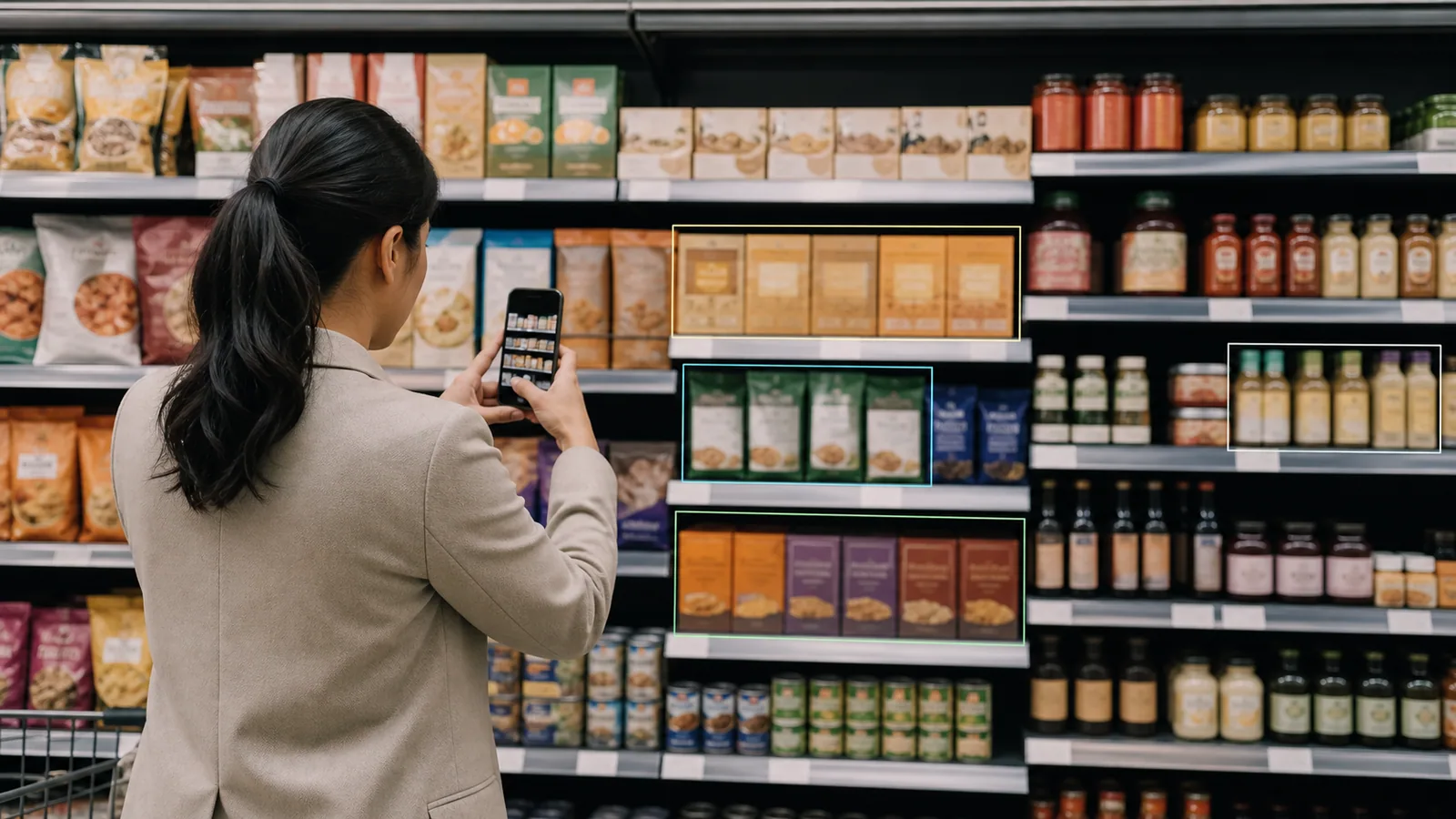
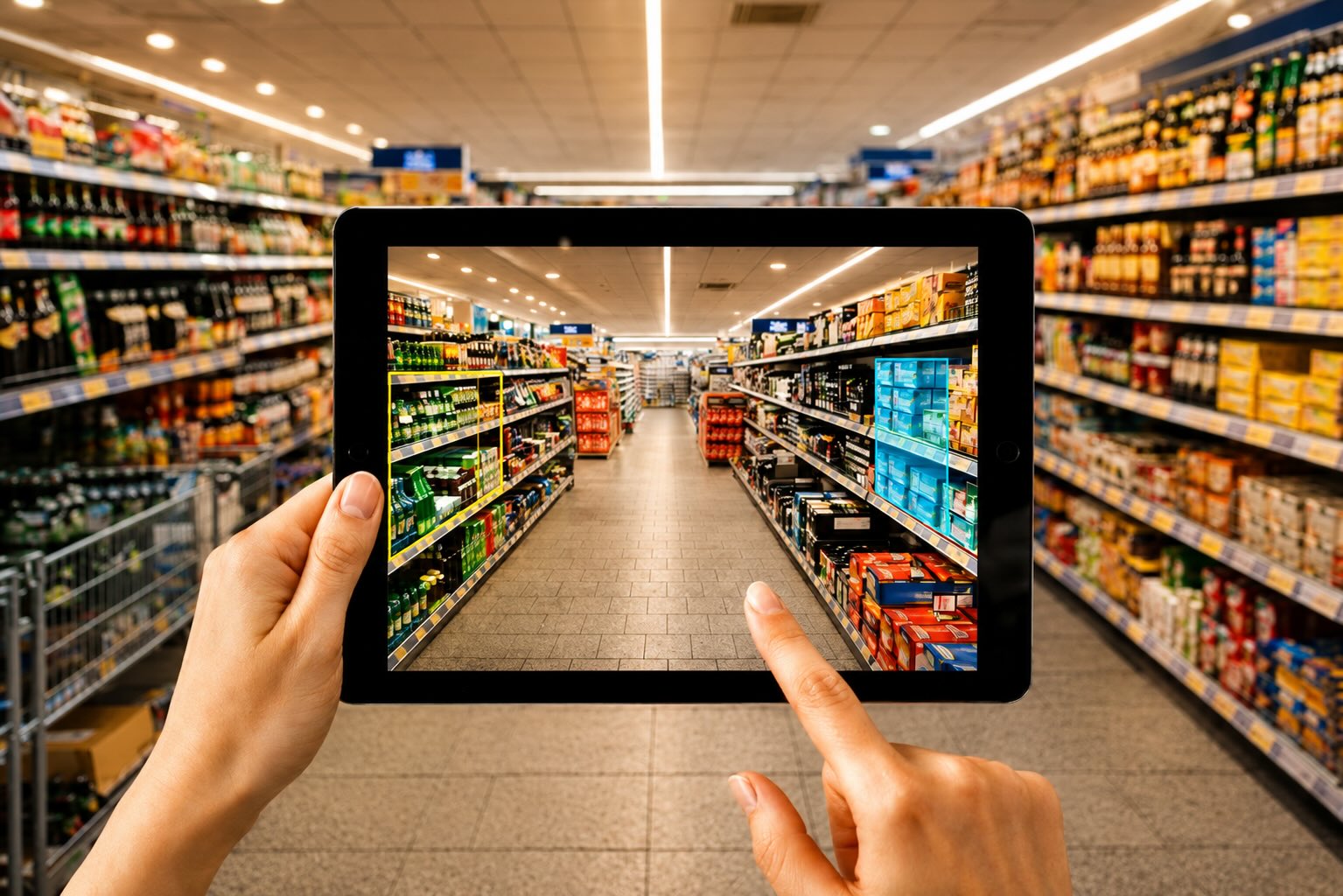
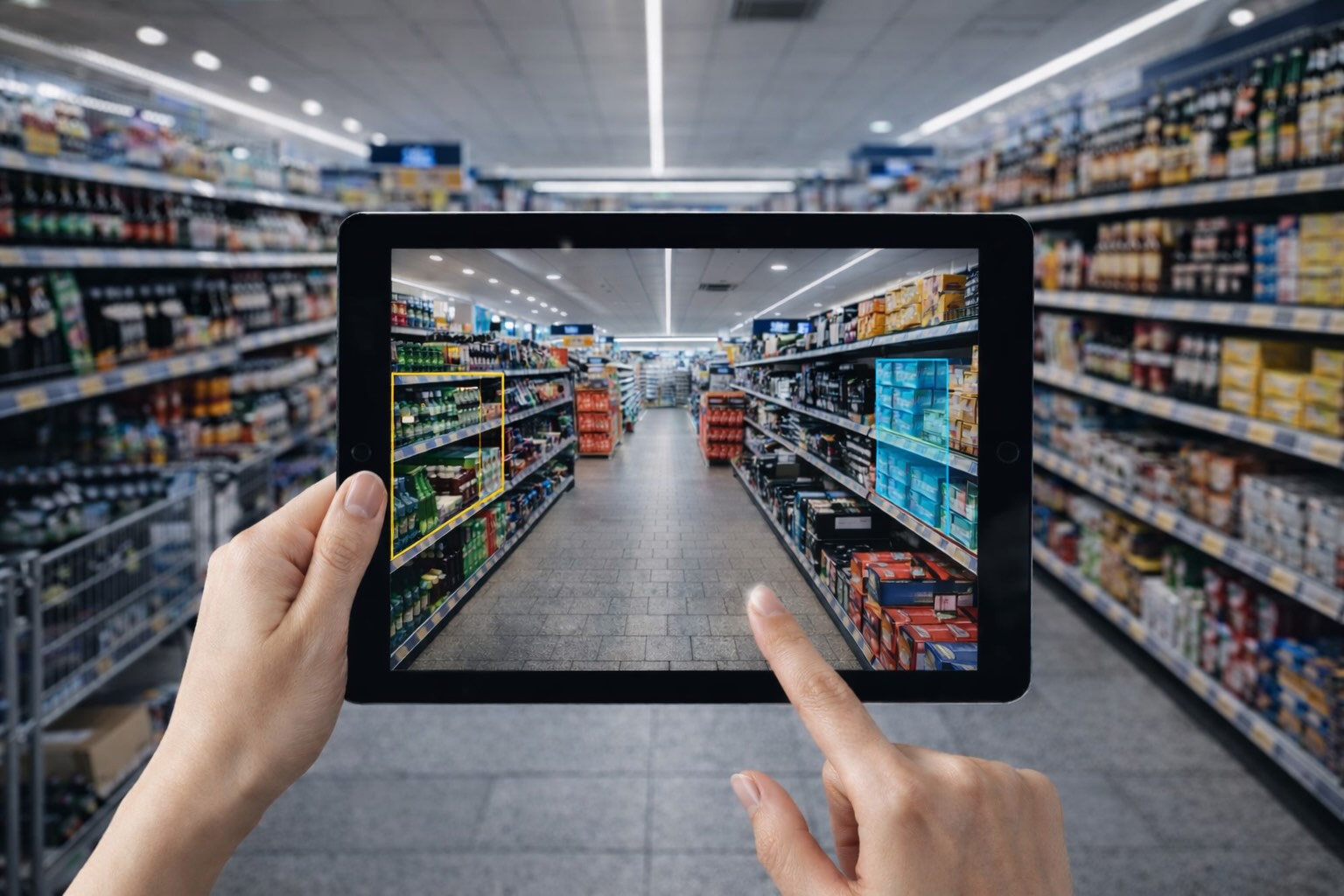
Best Out-of-Stock Detection Tools in 2026
Out-of-stock products are one of the most expensive problems in retail.
According to NielsenIQ, U.S. retailers lost more than $82 billion in sales in a single year due to empty shelves and out-of-stock products. NielsenIQ also estimates that stockouts cost retailers approximately $1.4 billion every week. These losses impact not only revenue but also customer satisfaction, brand loyalty, and market share.
As retail operations become increasingly data-driven, companies are turning to out-of-stock detection tools to identify shelf availability issues before they become lost sales.
In this guide, we'll review the best out-of-stock detection tools available in 2026, compare their strengths and weaknesses, and explain how modern AI-powered solutions are transforming shelf monitoring.
What Is an Out-of-Stock Detection Tool?
An out-of-stock detection tool helps retailers, brands, distributors, and field teams identify products that are missing from store shelves.
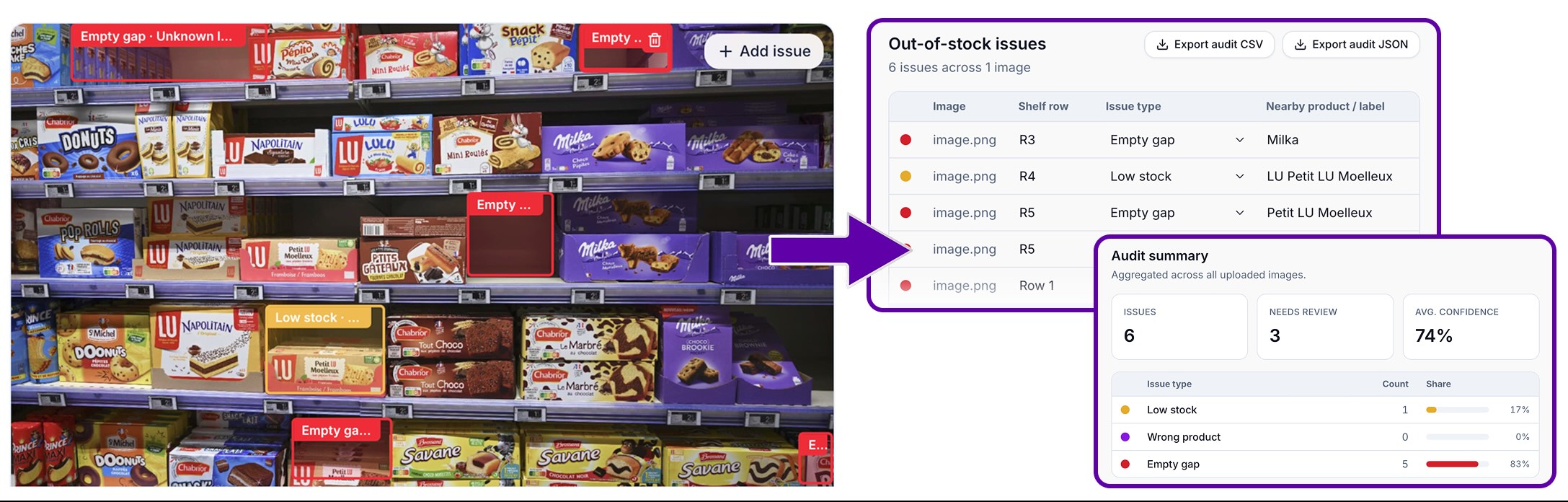
Depending on the solution, detection can be performed using:
- Shelf photos
- Computer vision
- Mobile auditing apps
- Store inventory data
- POS data
- Retail execution platforms
- Digital shelf monitoring
The goal is simple: identify stockouts as quickly as possible so corrective action can be taken before sales are lost.
Why Out-of-Stock Detection Matters
Out-of-stock situations create multiple business problems:
- Immediate lost sales
- Reduced customer satisfaction
- Lower brand loyalty
- Increased switching to competitors
- Reduced promotional effectiveness
- Poor retailer relationships
- Inaccurate inventory planning
Even a small improvement in shelf availability can generate significant revenue gains across hundreds or thousands of stores.
1. Extractify
Best for AI-powered shelf photo analysis
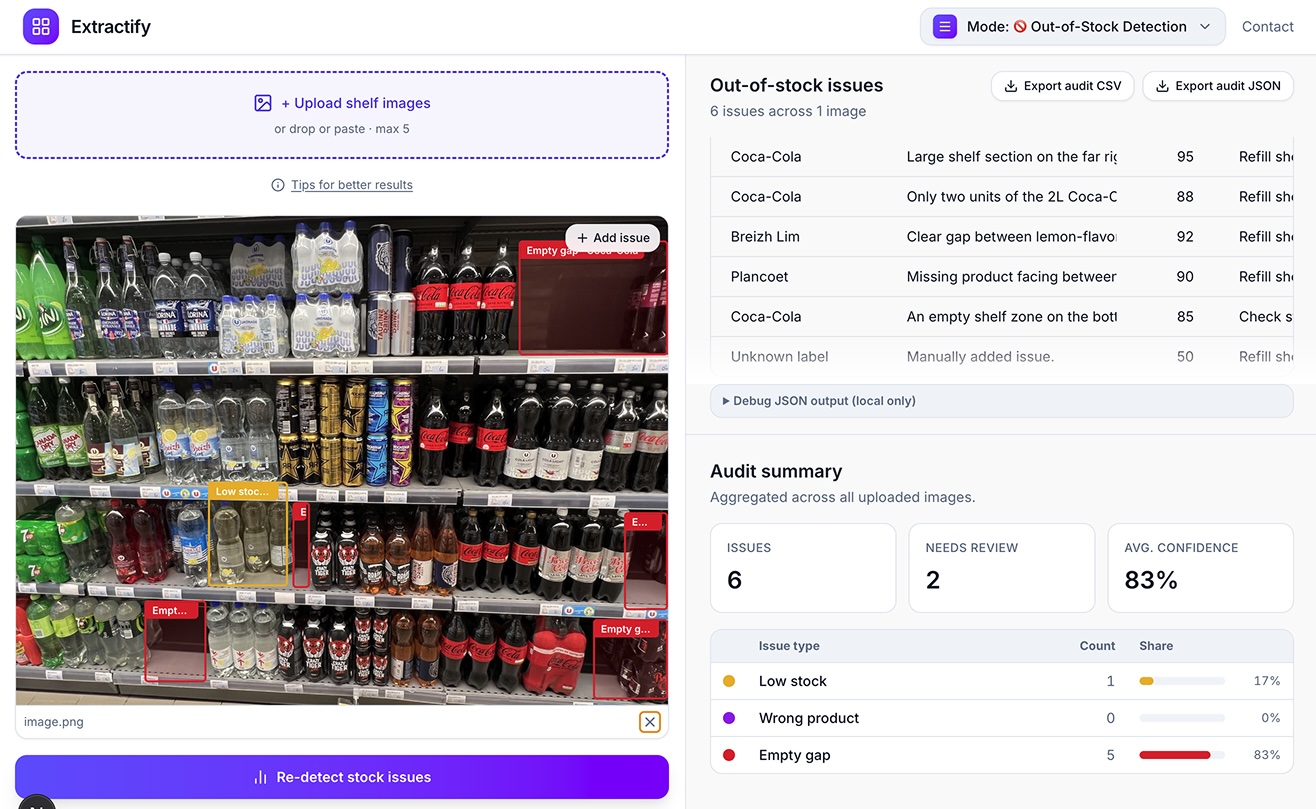
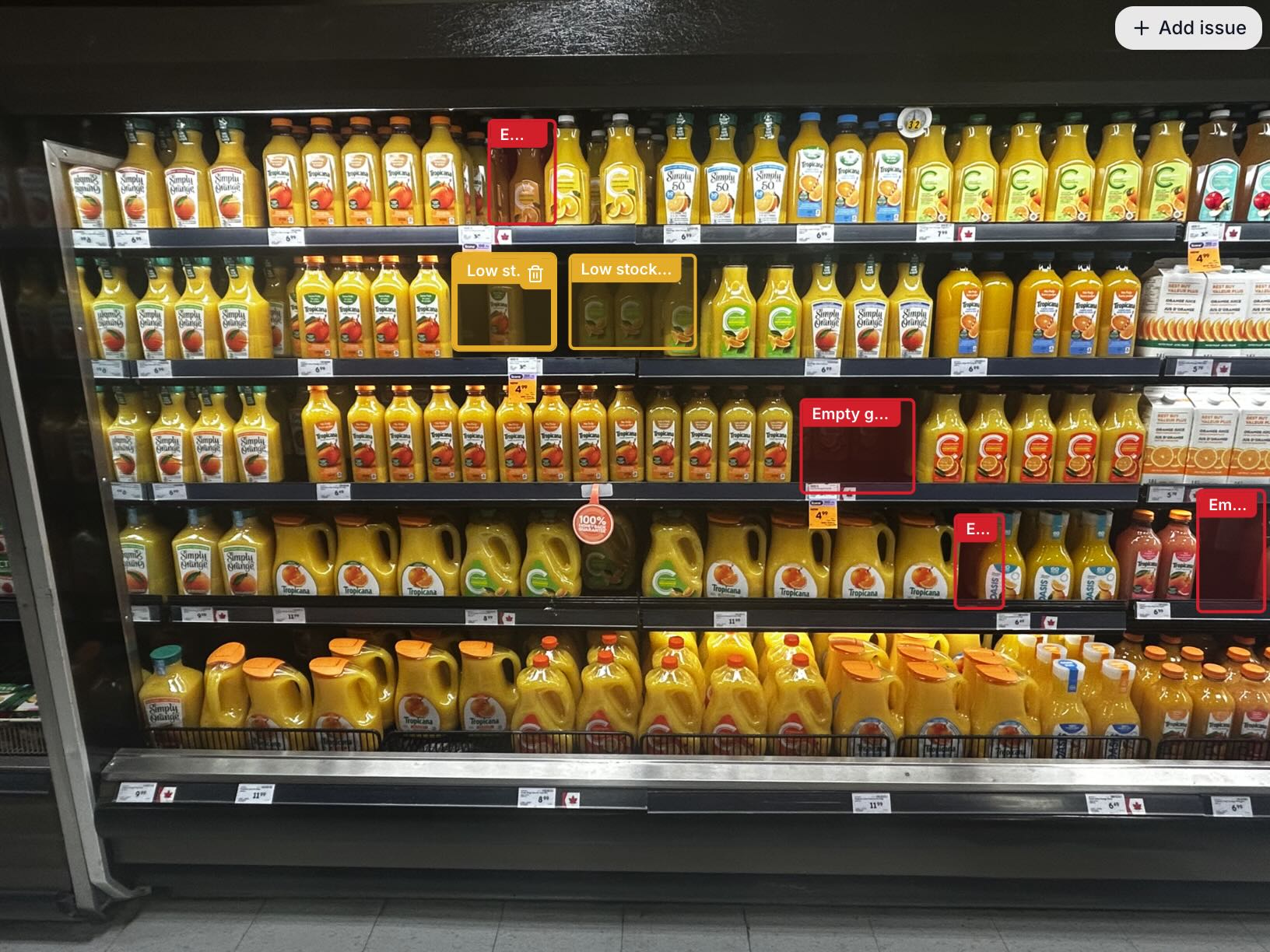
Extractify is an AI-powered retail image analysis platform that can automatically detect out-of-stock situations from shelf photos.
Users simply upload shelf images and receive structured data showing:
- Empty gaps
- Low-stock situations
- Shelf availability issues
- Shelf compliance problems
- Product placement errors
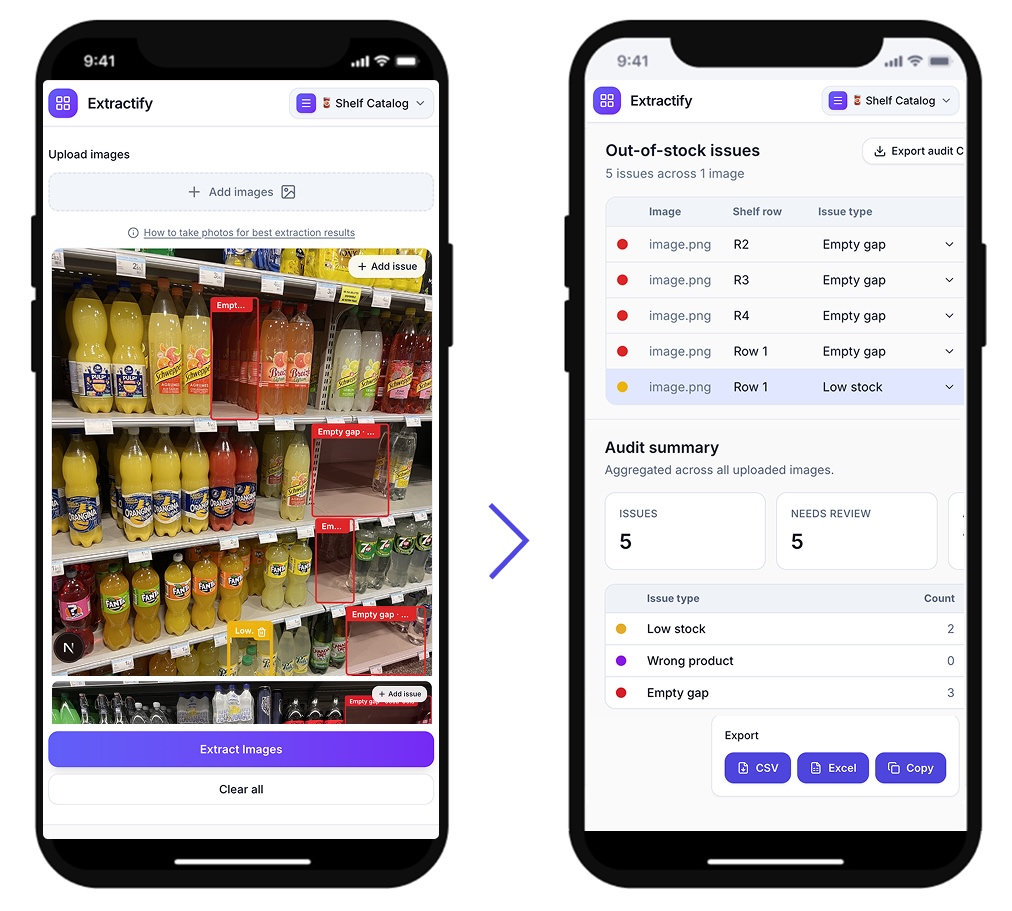
Unlike traditional retail audit solutions that require manual review, Extractify analyzes images automatically using computer vision models.
Pros
- Fast AI-powered analysis
- No manual shelf counting
- API available
- Scalable across thousands of images
- Easy integration into existing workflows
Cons
- Requires shelf photos
- Focused on image-based retail audits
Ideal For
- CPG brands
- Retail analytics teams
- Merchandisers
- Retail execution platforms
- Shelf audit providers
2. Trax Retail
Best for Enterprise Retail Execution
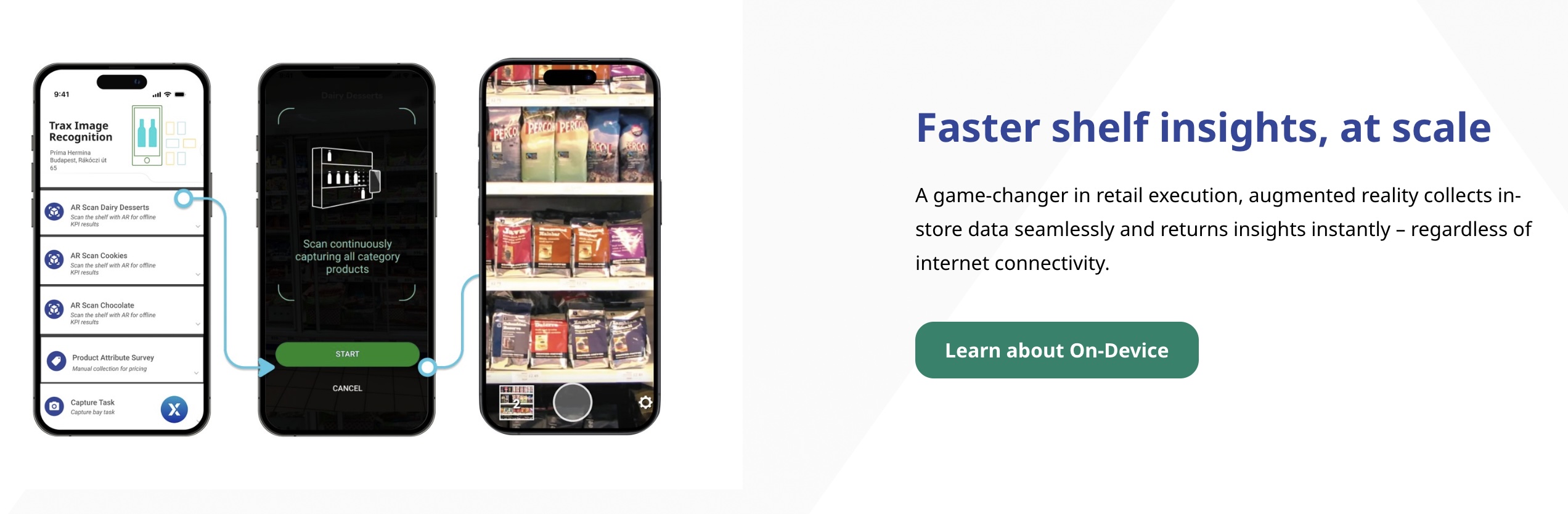
Trax is one of the most established names in retail image recognition.
The platform helps brands monitor:
- Shelf availability
- Planogram compliance
- Share of shelf
- Promotional execution
Trax combines image recognition with retail execution workflows for large enterprises.
Pros
- Mature platform
- Enterprise-grade capabilities
- Global presence
Cons
- Typically designed for large organizations
- Higher pricing compared to many alternatives
- Longer implementation process
3. ParallelDots ShelfWatch
Best for Large-Scale Retail Image Recognition
ParallelDots provides AI-powered shelf analytics through its ShelfWatch platform.
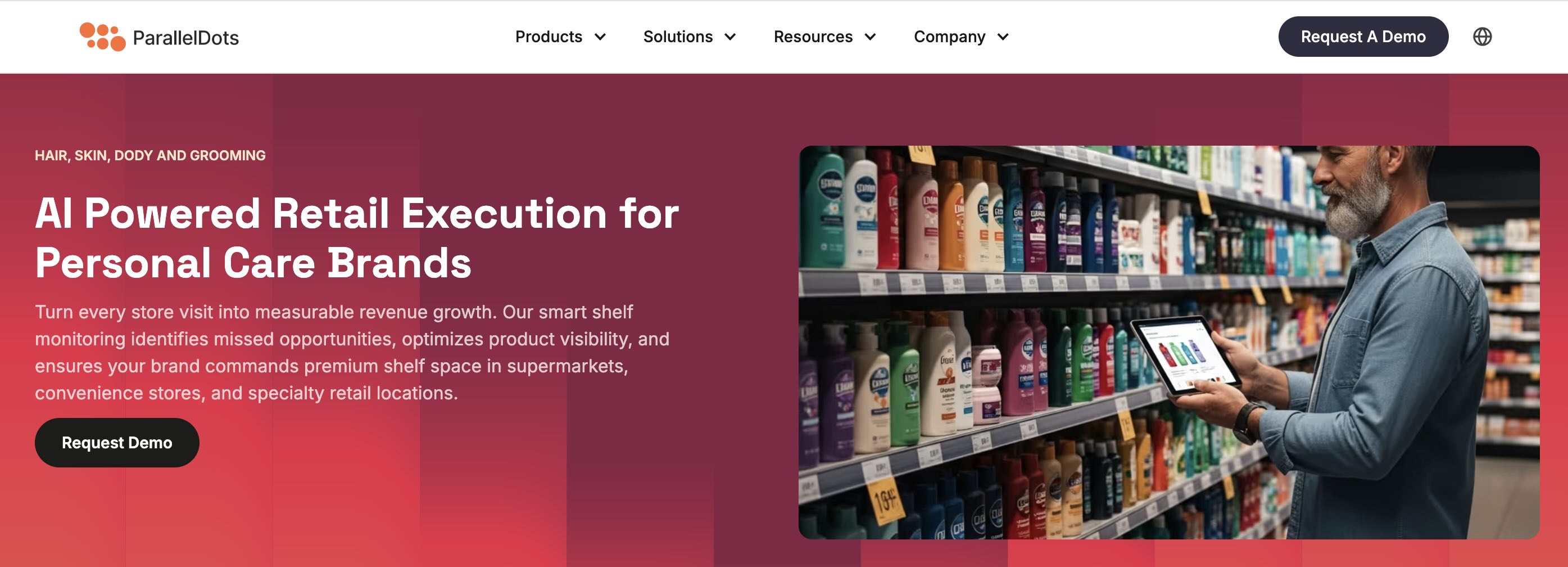
The solution analyzes shelf photos to detect:
- Out-of-stock products
- Shelf share
- Product assortment
- Pricing compliance
Pros
- Strong computer vision capabilities
- Global deployments
- Retail-specific AI models
Cons
- Enterprise-oriented pricing
4. Scandit
Best for Mobile Retail Audits
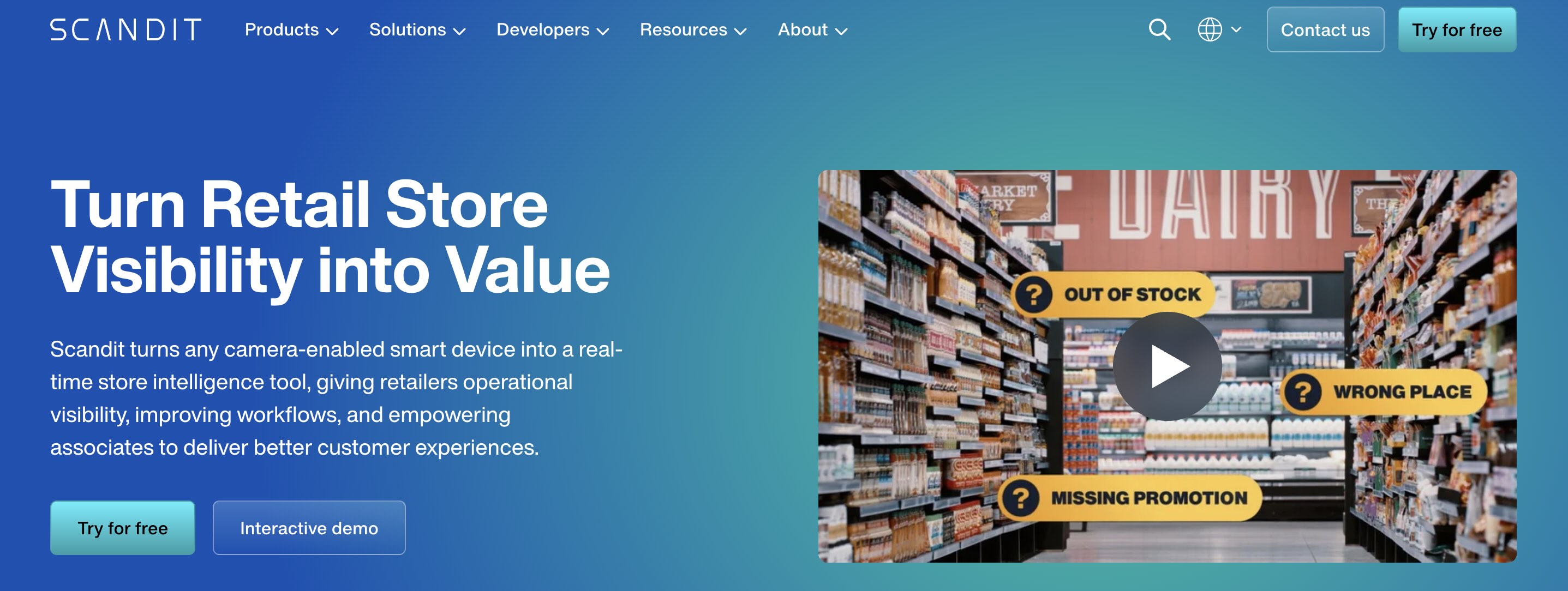
Scandit specializes in smart data capture and barcode scanning technologies.
Retailers use Scandit to improve store audits and inventory visibility through mobile devices.
Pros
- Strong mobile capabilities
- Easy deployment
- Barcode expertise
Cons
- Less focused on full shelf analytics
5. Repsly
Best for Field Teams
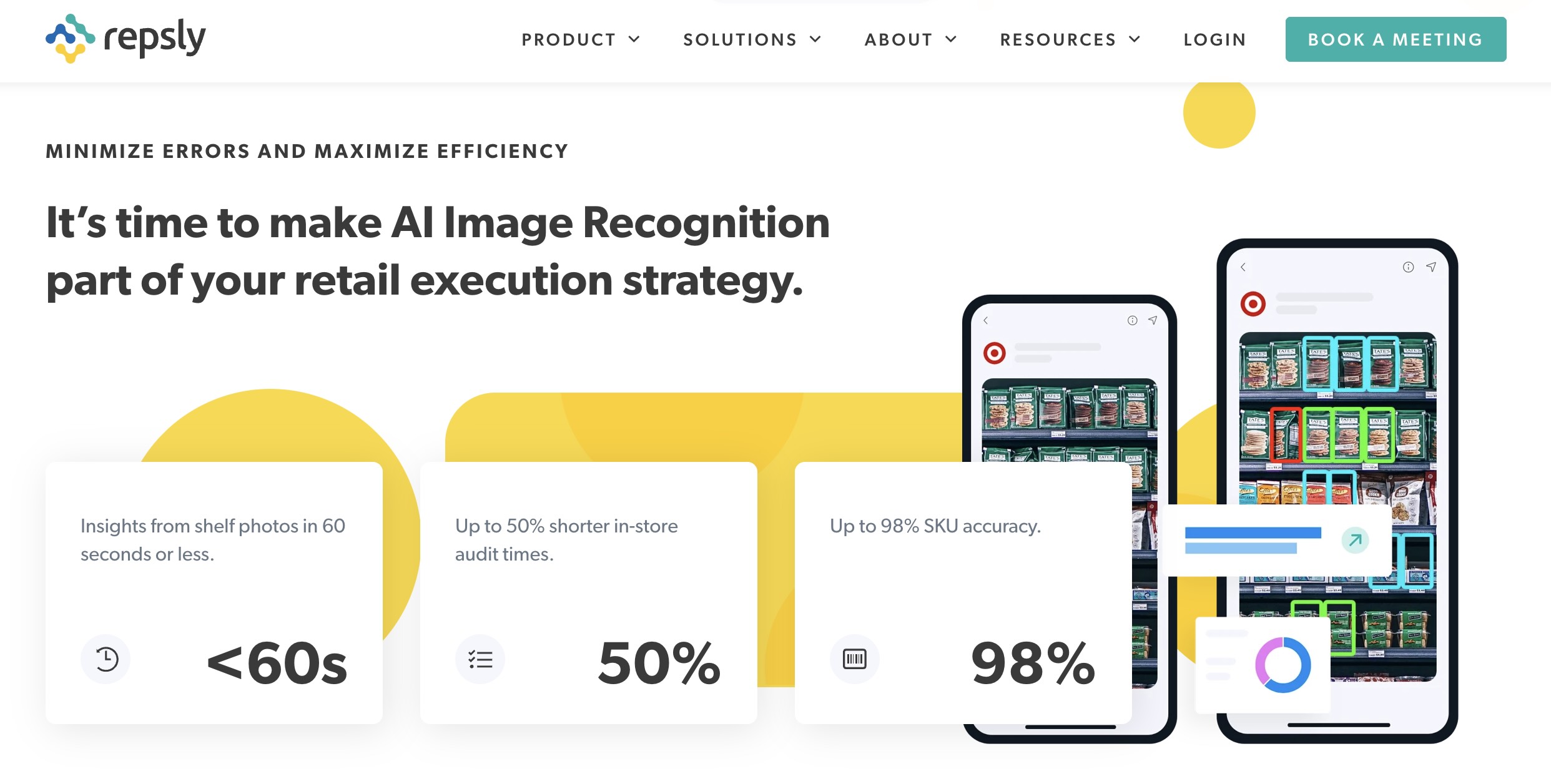
Repsly helps field representatives collect store execution data. Teams can document stockouts using mobile audits and store visits.
Pros
- Field team management
- Mobile-first workflow
- Retail execution features
Cons
- Requires manual store visits
6. GoSpotCheck
Best for Retail Audits
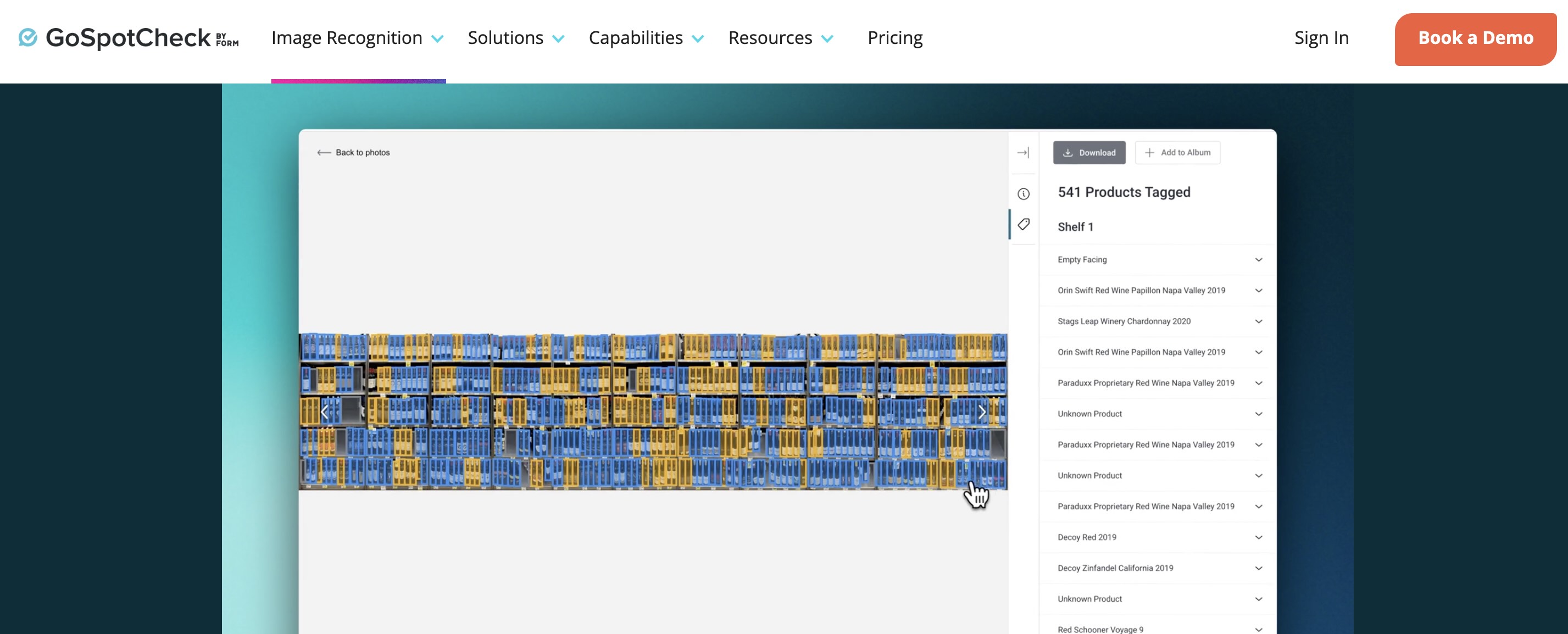
GoSpotCheck enables retail teams to perform structured store inspections and compliance audits.
Stockouts can be identified through custom audit workflows.
Pros
- Flexible forms
- Retail-focused
- Strong reporting
Cons
- More manual than AI-driven solutions
7. Field Agent
Best for Crowdsourced Shelf Monitoring
Field Agent uses a network of shoppers and auditors to collect in-store data.
Brands can verify shelf availability across large geographic areas.
Pros
- Wide coverage
- Fast deployment
- Flexible data collection
Cons
- Human-driven process
- Ongoing operational costs
8. Data Impact
Best for E-commerce Out-of-Stock Detection
Data Impact focuses on digital shelf analytics.
Brands can monitor:
- Online stock availability
- Retailer inventory status
- Product listings
- Digital shelf performance
Pros
- Strong e-commerce capabilities
- Multi-retailer monitoring
Cons
- Not designed for physical shelf images
9. NielsenIQ Digital Shelf
Best for Online Retail Availability Monitoring
NielsenIQ offers digital shelf monitoring tools that help brands track product availability across online retailers.
Pros
- Trusted retail data provider
- Strong analytics
Cons
- Focused primarily on e-commerce environments
10. Intelligence Node
Best for Omnichannel Availability Tracking
Intelligence Node helps brands monitor product availability across online retailers and marketplaces.
Pros
- Omnichannel visibility
- Competitive monitoring
Cons
- Less focused on physical shelf execution
How to Choose an Out-of-Stock Detection Tool
The right solution depends on your use case.
Choose AI Shelf Photo Analysis If You Need:
- Physical shelf monitoring
- Shelf audits at scale
- Fast image processing
- Automated reporting
Choose Retail Execution Platforms If You Need:
- Field team management
- Store visit workflows
- Retail compliance programs
Choose Digital Shelf Monitoring If You Need:
- E-commerce availability tracking
- Marketplace monitoring
- Online stock visibility
AI Is Changing Out-of-Stock Detection
Historically, out-of-stock detection relied on:
- Manual audits
- Inventory systems
- Field reports
Today, AI and computer vision allow retailers to detect shelf issues directly from images.
This reduces manual work while providing faster and more scalable visibility across stores.
If your shortlist includes enterprise shelf-recognition vendors, see this side-by-side breakdown of Trax alternatives for shelf image recognition.
As image analysis technology improves, AI-powered shelf monitoring is becoming one of the most cost-effective ways to improve on-shelf availability.