Top Tools to Measure Share of Shelf in 2026
Introduction
Share of shelf is one of the most practical metrics for understanding how visible a brand really is in-store. It measures how much shelf space, number of facings, or visual presence a brand occupies compared with competitors in the same category.
For CPG brands, field sales teams, category managers, and retail analysts, this matters because physical retail is still a brutally competitive environment. According to FMI’s 2024 Food Industry Facts, the average supermarket carried 31,795 items in-store in 2024. In other words, a brand is not just competing with a few direct rivals. It is fighting for visibility inside a store with tens of thousands of products.
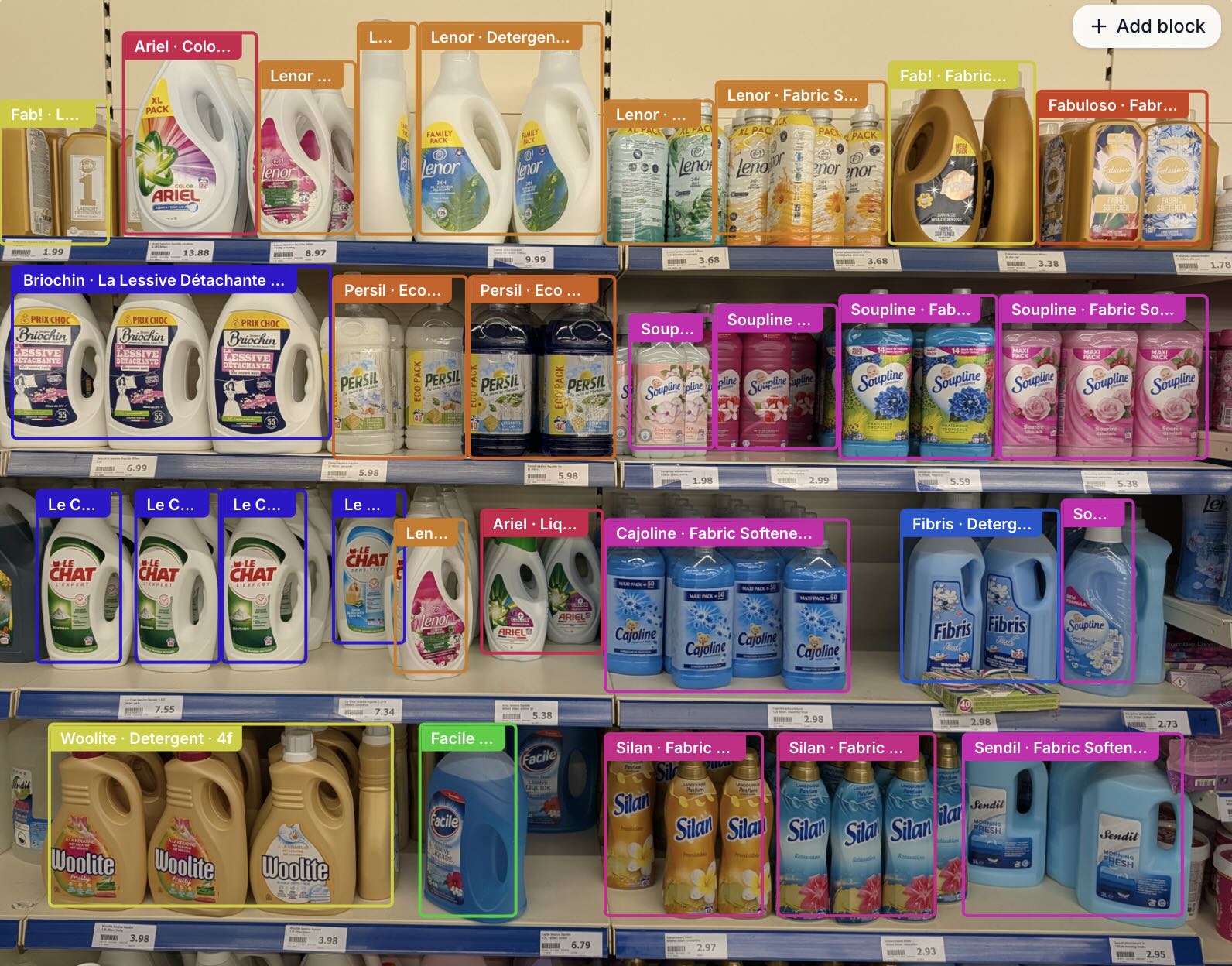
That is why shelf execution matters. If a product has fewer facings than expected, is placed in the wrong section, or loses space to a competitor, the sales impact can be significant. NielsenIQ’s analysis of the baby formula shortage showed how poor on-shelf availability can translate into real missed sales: during the week of April 30, baby formula had an 81.2% on-shelf availability rate and $11 million in missed sales due to product unavailability.
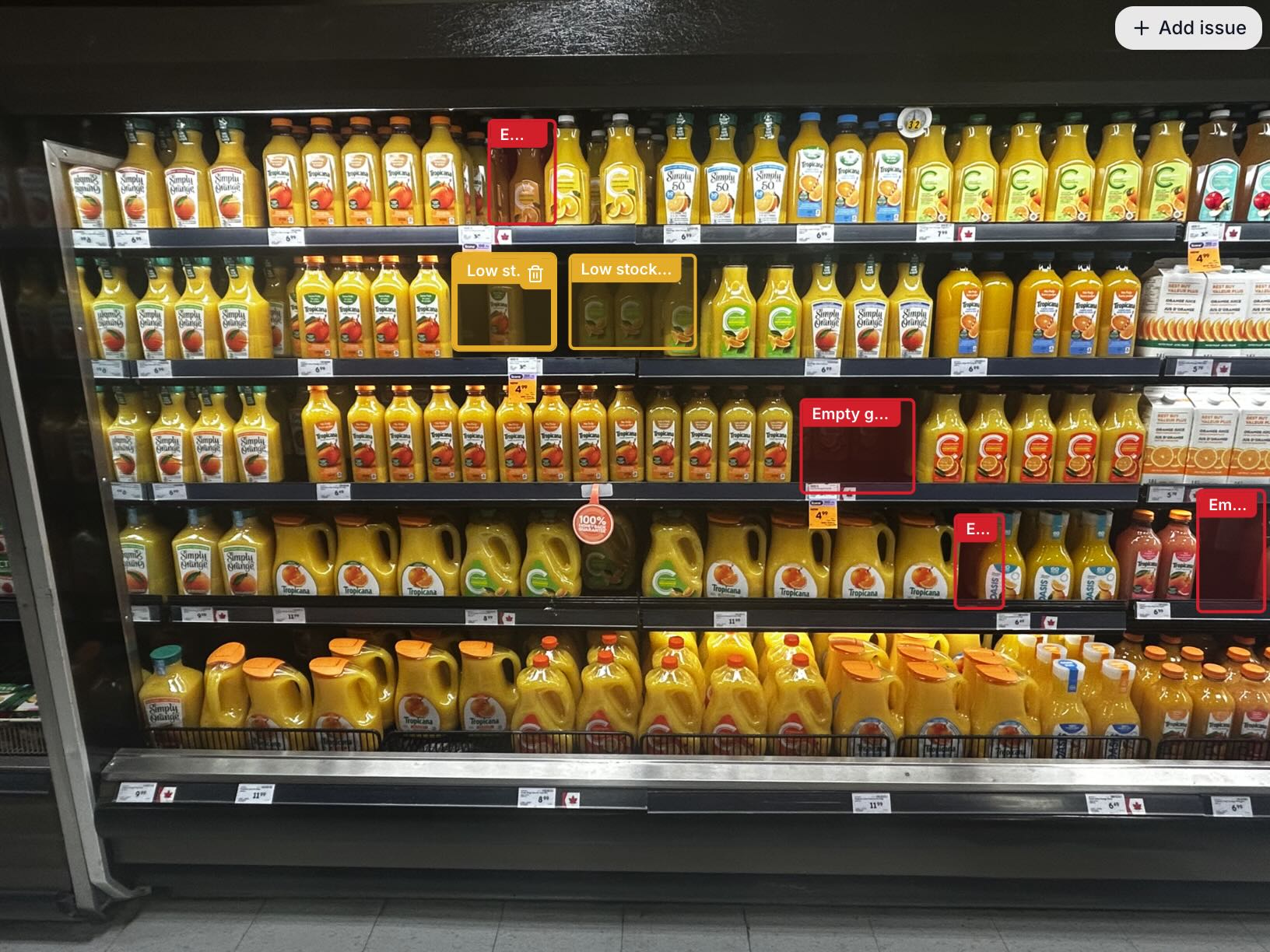
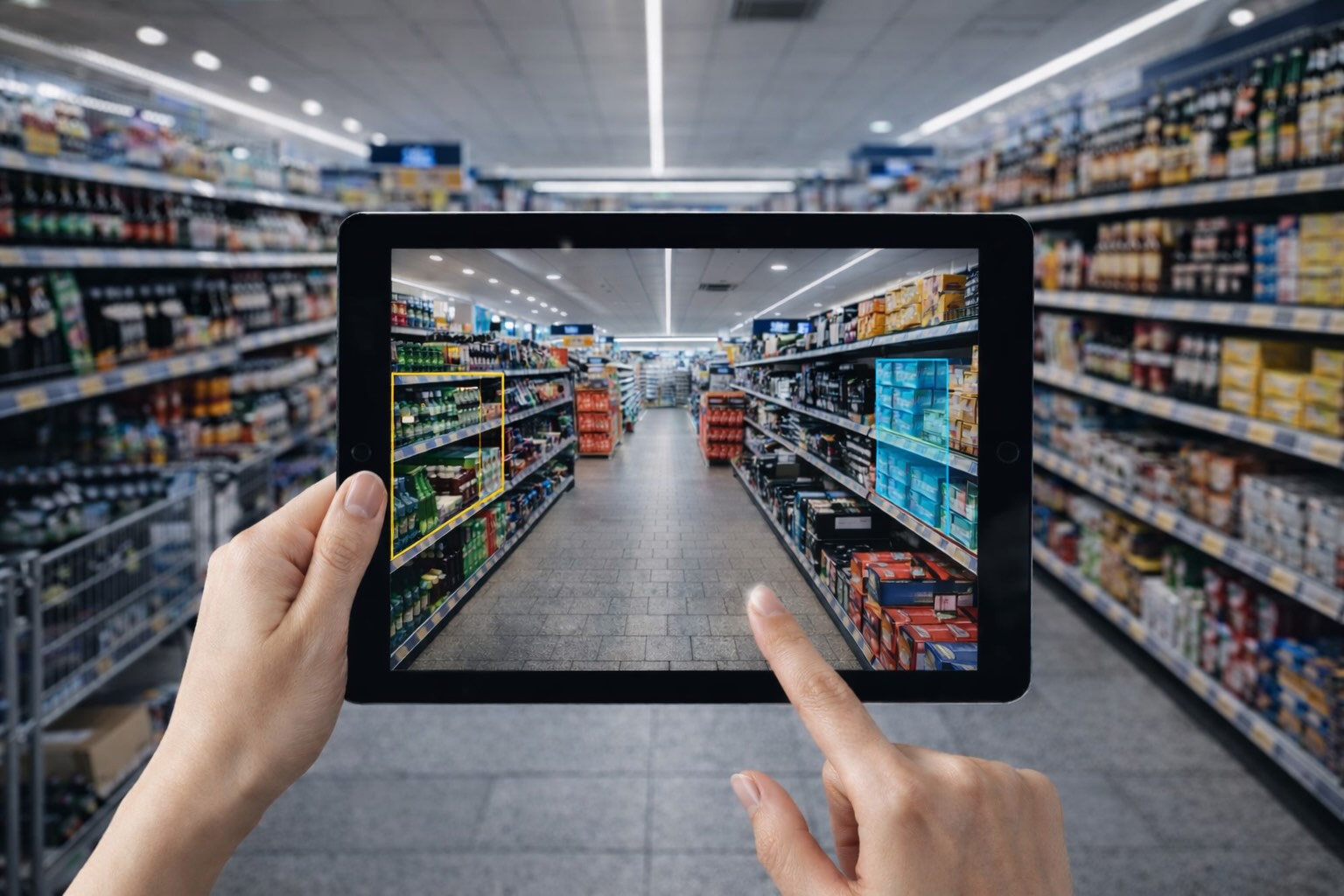
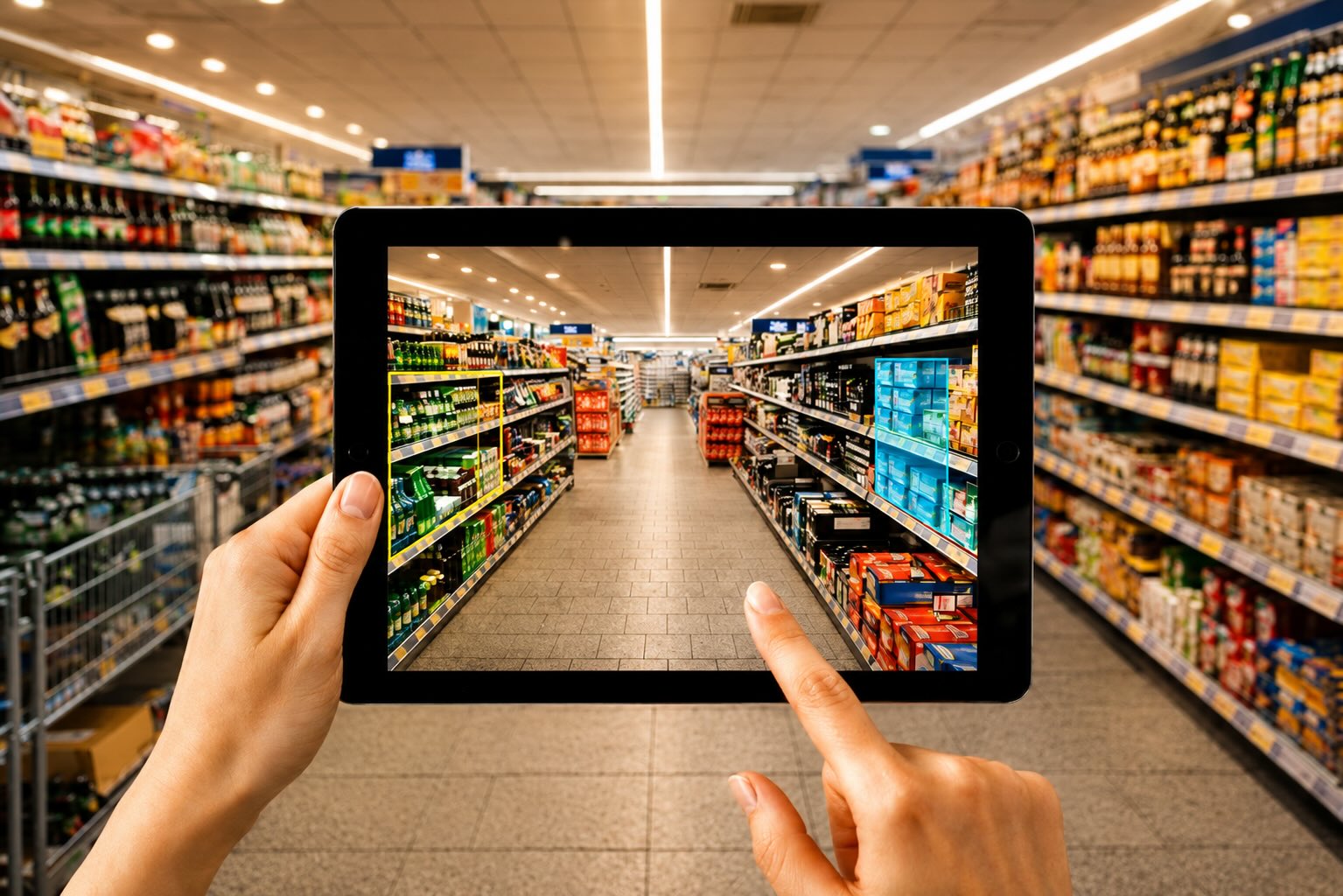
The problem is that measuring share of shelf manually is slow. A field rep has to visit a store, take photos, count facings, estimate shelf area, compare brands, and often enter the data later. Today, AI image recognition and shelf intelligence tools can turn store photos into structured shelf data much faster.
Below are some of the top tools to measure share of shelf, from lightweight photo-based tools to enterprise retail execution platforms.
1. Extractify: Best for fast share of shelf analysis from store photos
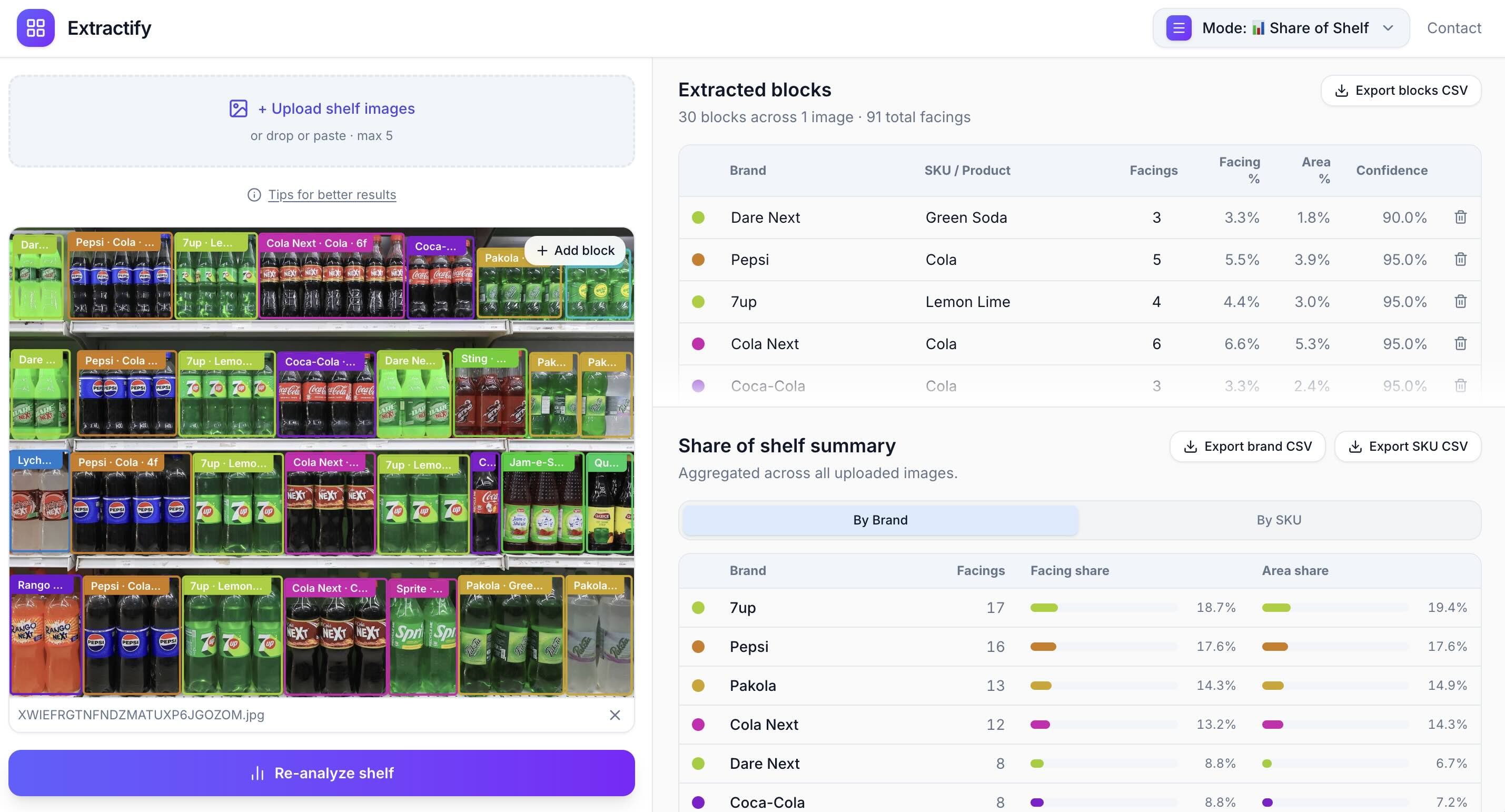
Best for: Small teams, field reps, retail analysts, category managers, and brands that want a simple way to analyze shelf photos without a heavy enterprise setup.
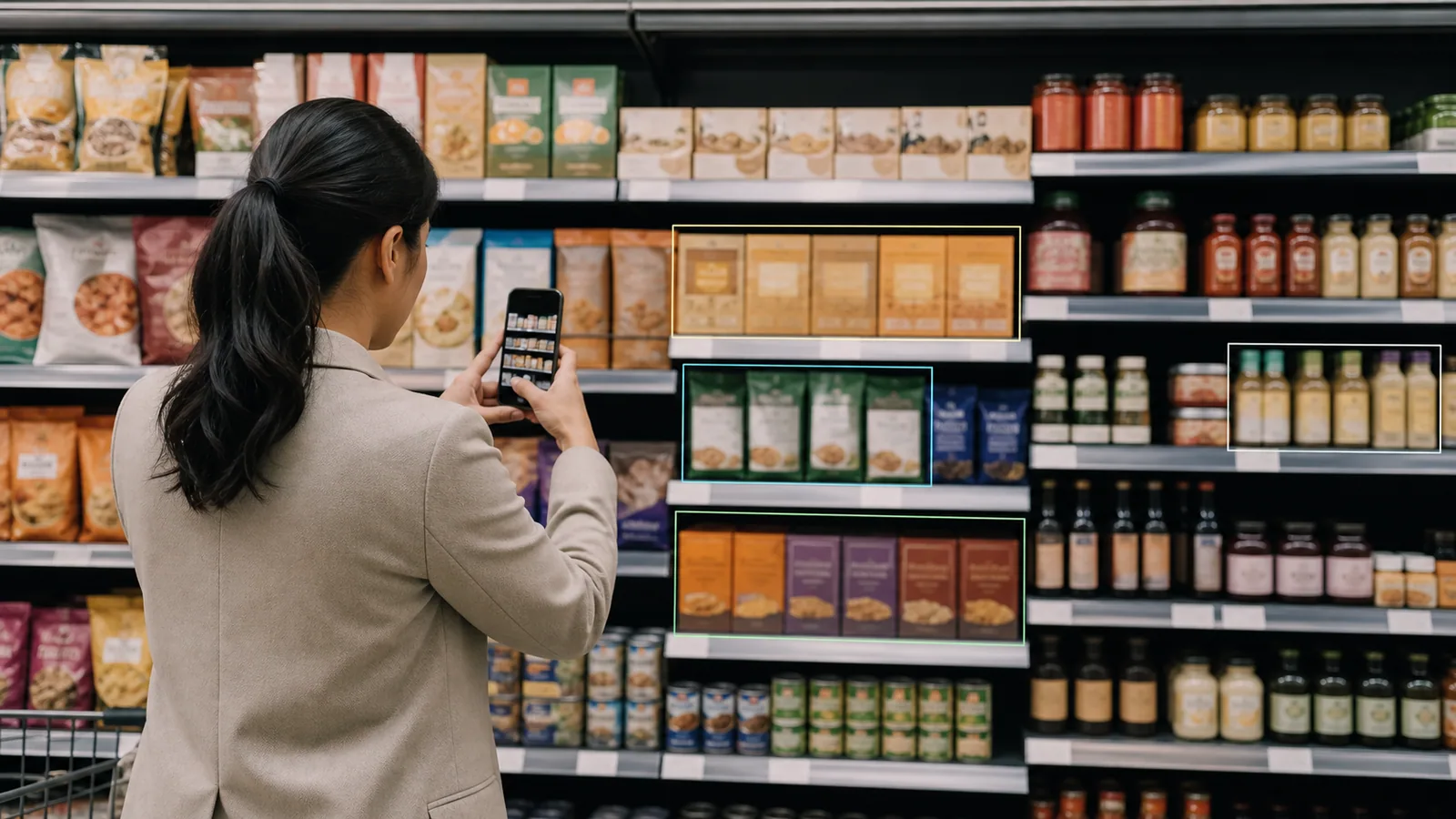
Extractify’s Share of Shelf tool lets users upload retail shelf photos, detect product blocks by brand, and calculate both facing share and area share. It is designed for people who need quick, structured data from store images without manually counting everything on-site.
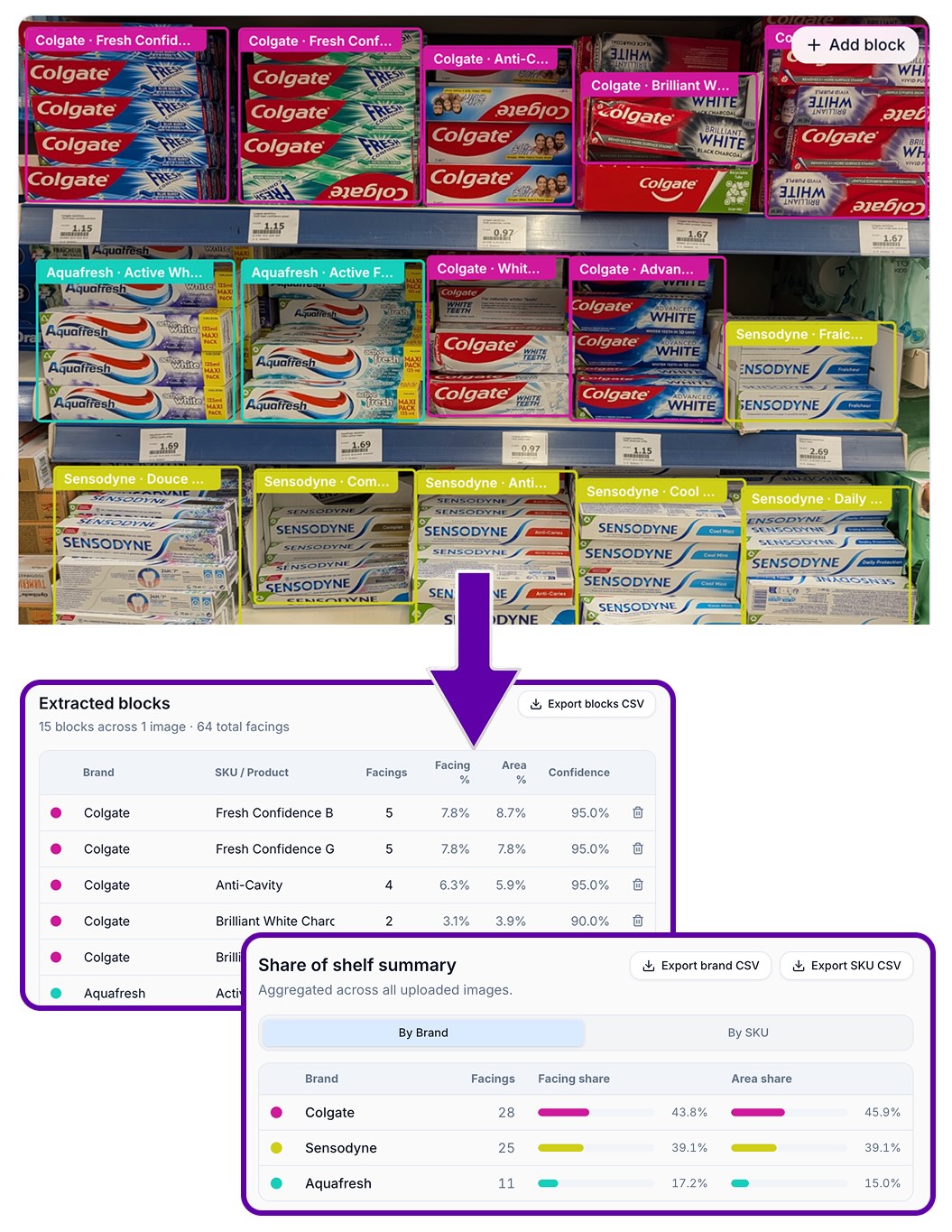
With Extractify, users can upload one or several shelf photos, let the AI detect product blocks, review the detected brands, SKUs, facings, and confidence scores, then edit blocks directly on the image before exporting the results to CSV.
Key features
- Upload shelf photos directly
- Detect brands, SKUs, product blocks, and facings
- Calculate facing share and area share
- Review, resize, add, delete, or correct blocks on the image
- Export block-level or aggregated CSV reports
Why it stands out
Most enterprise retail execution tools are built for large CPG organizations with complex workflows, sales force integrations, and long onboarding cycles. Extractify is more lightweight. It is better suited for teams that want to test photo-based share of shelf tracking quickly, run audits, or turn shelf images into usable data without committing to a full retail execution platform.
Best choice if you want: a simple, photo-based share of shelf tool that produces editable data and CSV exports.
2. Trax Retail: Best for enterprise retail execution and image recognition
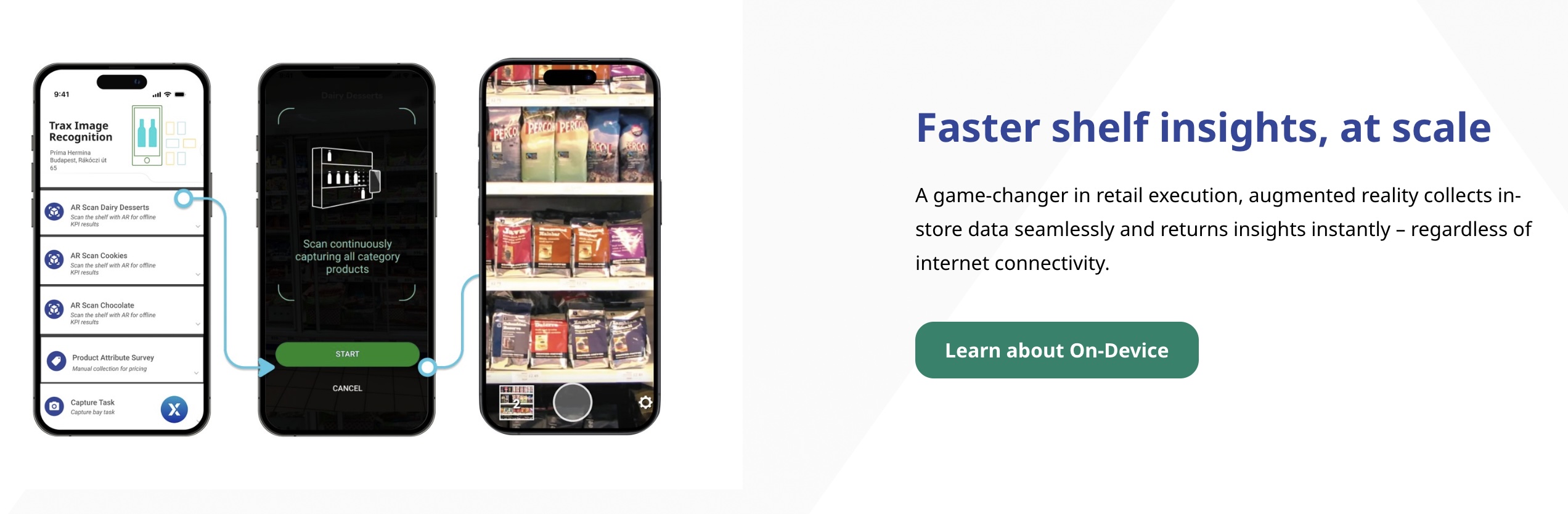
Best for: Large CPG brands and retailers that need shelf analytics at scale.
Trax Retail is one of the most established names in retail image recognition. Its technology is used to automate shelf audits, detect out-of-stocks, monitor planogram compliance, and measure competitive share of shelf. Trax also explains that share of shelf is similar to market share, but based on space allocation, which makes it useful for identifying growth opportunities at store or retailer-banner level.
Trax is built for scale. It is not just a share of shelf calculator; it is a broader shelf intelligence and retail execution system. For large brands with field teams, multiple retail partners, and thousands of stores, this kind of infrastructure can be valuable.
Key features
- Retail image recognition
- Share of shelf measurement
- Planogram compliance
- Out-of-stock detection
- Field execution analytics
- Enterprise reporting
Best choice if you want: an enterprise-grade retail execution platform with advanced image recognition.
3. ParallelDots ShelfWatch: Best for AI shelf execution workflows
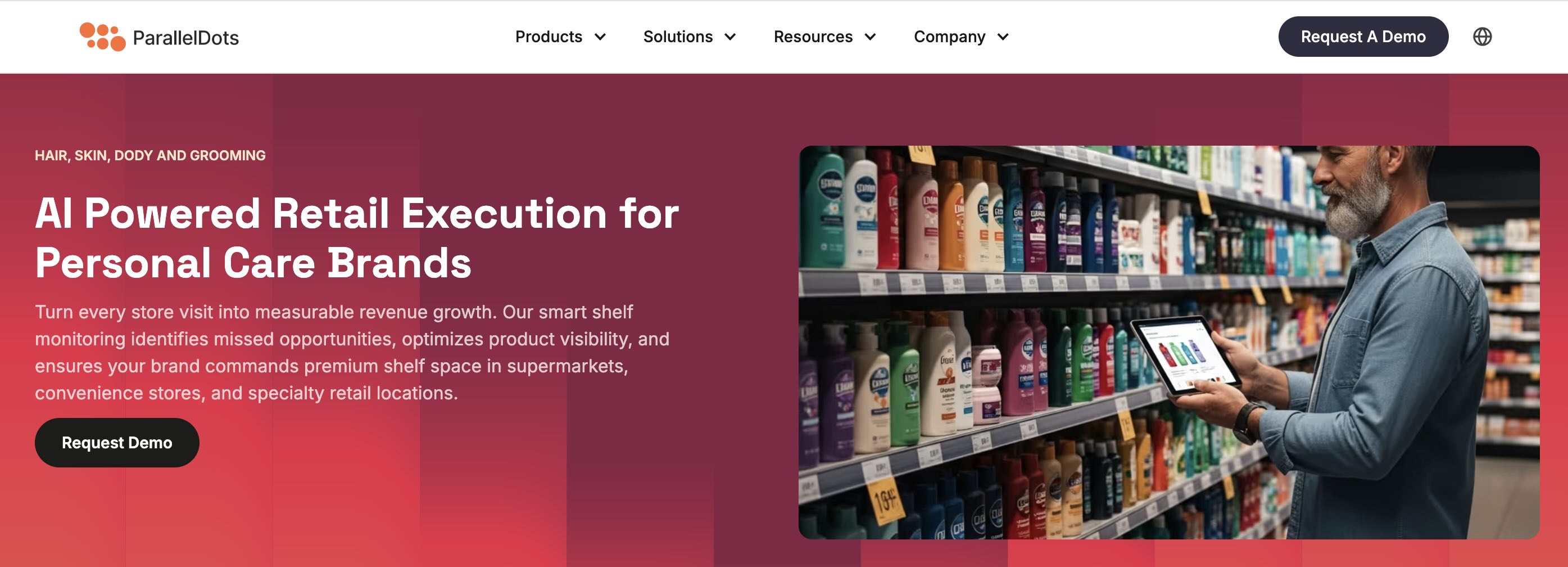
Best for: CPG teams that want to automate shelf monitoring and retail execution checks.
ParallelDots ShelfWatch focuses on turning shelf images into data for retail execution. The platform is built to track on-shelf availability, shelf share, planogram compliance, pricing gaps, and competitor adjacencies in real time.
It is positioned for teams that need more than a one-off audit. The tool is more relevant when share of shelf is part of a broader execution process, including availability, promotions, category visibility, and store-level compliance.
Key features
- AI image recognition from shelf photos
- Shelf execution analytics
- Stockout and visibility tracking
- Compliance monitoring
- Field team workflows
Best choice if you want: AI shelf monitoring as part of broader retail execution.
4. Snap2Insight: Best for large-scale shelf intelligence programs
Best for: CPG brands that need high-volume image recognition and store coverage.
Snap2Insight is another image recognition platform built for CPG retail execution. Its Perfect Shelf Platform uses AI to deliver real-time shelf data, compare shelf conditions against planograms or standards, and report merchandising defects back to field teams.
Snap2Insight can help teams measure on-shelf availability, share of shelf, planogram compliance, and promotional execution.
Key features
- AI shelf image recognition
- Share of shelf measurement
- Planogram and promotion compliance
- On-shelf availability tracking
- Enterprise integrations
Best choice if you want: large-scale shelf intelligence integrated into existing enterprise workflows.
5. StayinFront: Best for retail execution teams that need image recognition inside a sales platform
Best for: Field sales teams already using retail execution software.
StayinFront offers retail execution software with image recognition capabilities. Its image recognition solution can help teams track on-shelf availability, share of shelf, products at eye level, promotional prices, promotional stands, shelf layouts, planogram versus realogram, and competitor products.
This makes it useful for teams that do not want a standalone share of shelf tool, but rather a field sales system where shelf photos, store visits, tasks, and reporting are connected.
Key features
- Retail execution platform
- Image recognition
- Share of shelf tracking
- Promotional compliance
- Planogram vs. realogram checks
- Competitor product tracking
Best choice if you want: share of shelf tracking inside a broader field sales execution system.
6. Ailet: Best for real-time shelf image recognition
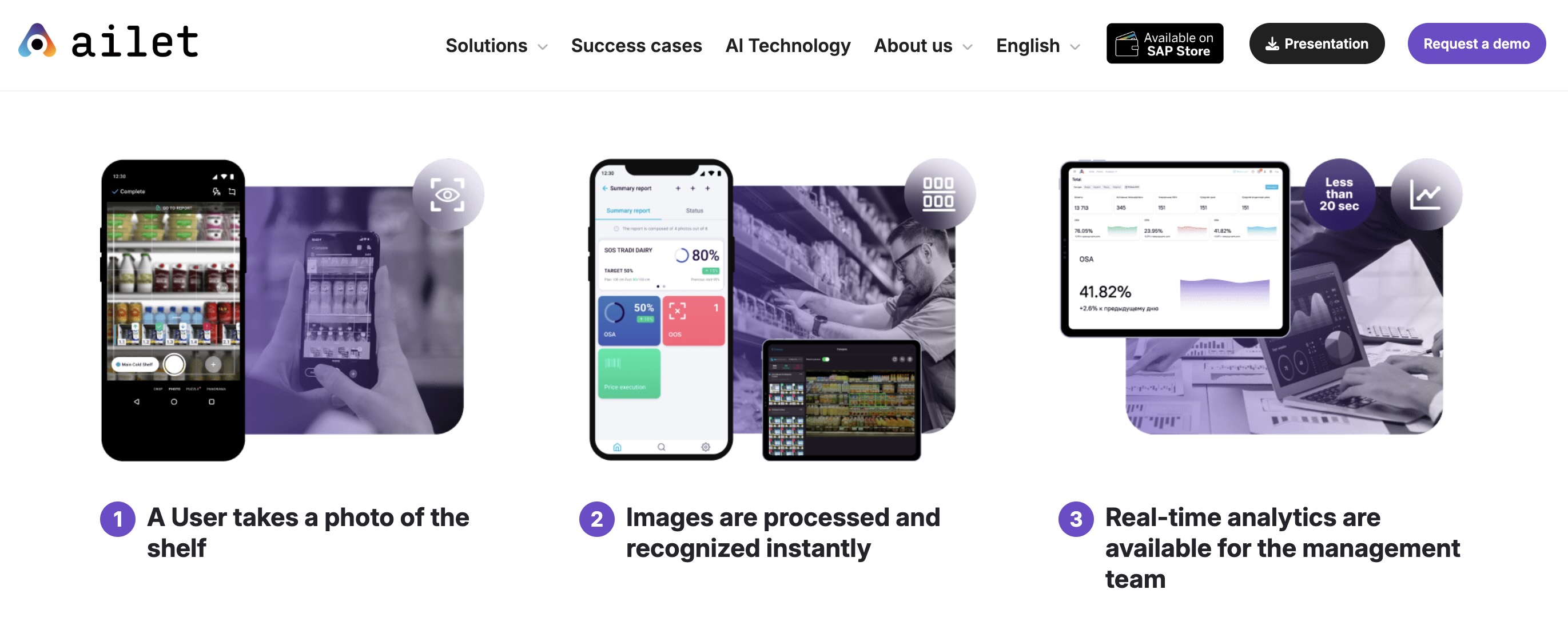
Best for: Retailers and CPG teams that want real-time shelf analysis.
Ailet offers shelf image recognition for grocery stores, pharmacies, convenience stores, and other retail environments. Its platform can analyze product availability, planogram adherence, and share of shelf from shelf images.
Key features
- Real-time shelf analysis
- Product availability tracking
- Planogram adherence
- Share of shelf analysis
- Retail image recognition
Best choice if you want: real-time shelf recognition for retail execution and availability monitoring.
7. Storesight: Best for continuous share of shelf measurement
Best for: Brands that want ongoing shelf visibility instead of occasional manual audits.
Storesight takes a different approach. Instead of relying only on traditional field reps or one-off store audits, it uses shelf photos and AI to help brands monitor share of shelf at scale. Its Share of Shelf product defines share of shelf within a category context and compares a brand’s presence to the total available shelf positions in that category.
Storesight also describes its share of shelf use case as using panoramic in-store photos and AI-powered clustering to calculate share of shelf by pixel size or facings across many stores.
Key features
- Continuous shelf photo collection
- AI-powered share of shelf measurement
- Large-scale store coverage
- Brand and category visibility tracking
Best choice if you want: always-on share of shelf visibility across many stores.
8. Repsly: Best for field teams that need retail execution and merchandising workflows
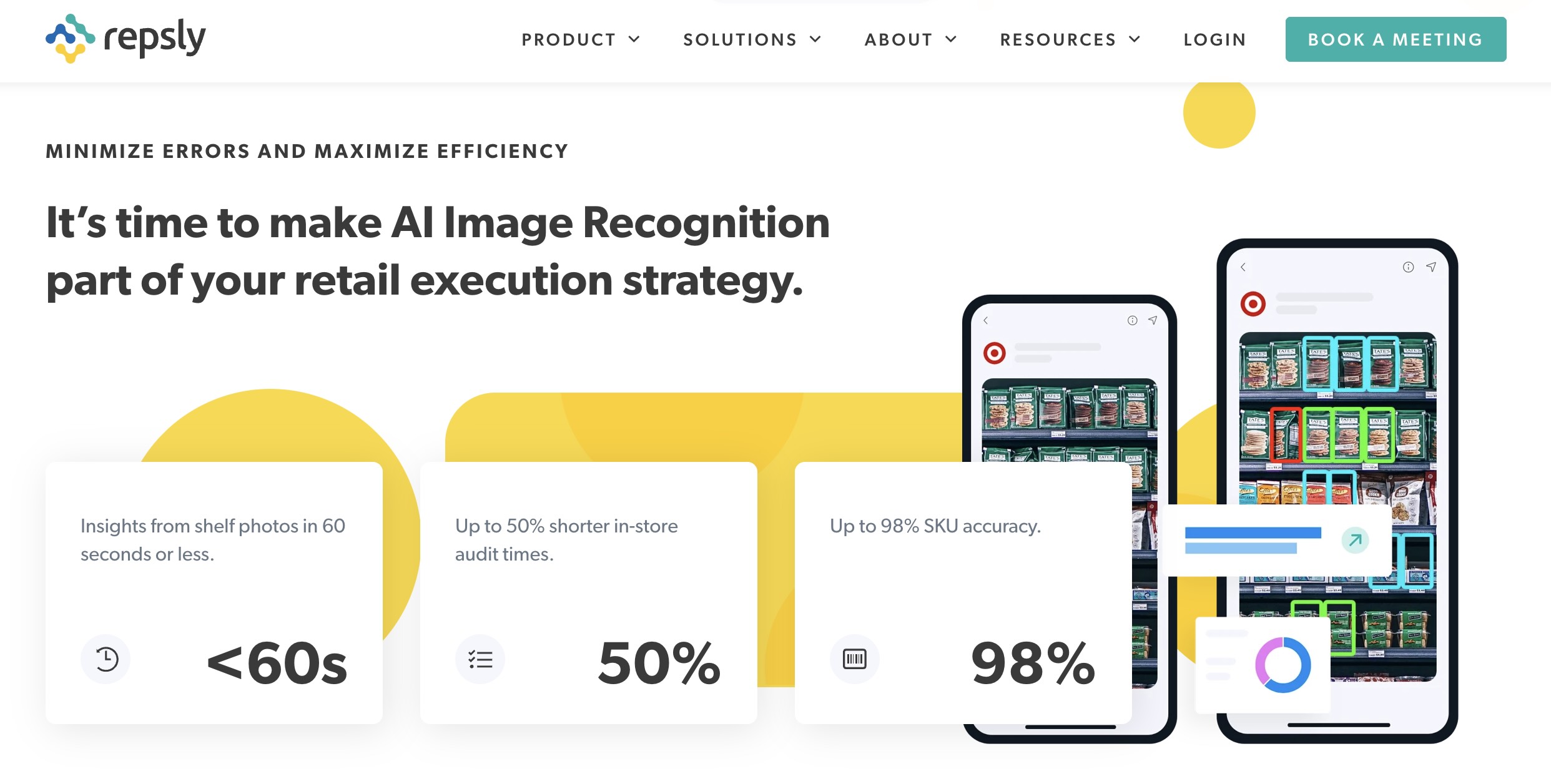
Best for: CPG field teams that need visit planning, task management, and merchandising execution.
Repsly is positioned as a retail execution platform for CPG field teams. For share of shelf, the value is not only image analysis. It is also the ability to connect shelf checks with store visits, field rep activity, retail tasks, and execution reporting.
Repsly is most relevant when shelf data is part of a larger field execution workflow rather than a standalone image analysis task.
Key features
- Field team management
- Store visit workflows
- Merchandising execution
- Retail audit data collection
- Image recognition capabilities
Best choice if you want: retail execution software for field reps, not just shelf image analysis.
9. VisitBasis BrandML: Best for mobile retail execution audits
Best for: Merchandisers and sales reps who need mobile shelf audits.
VisitBasis offers BrandML, an image recognition technology designed for mobile retail execution. BrandML allows merchandisers to calculate product share of shelf by taking a picture of the category shelving in each store.
Key features
- Mobile shelf photo capture
- Share of shelf calculation
- Retail execution app integration
- Field audit workflows
Best choice if you want: mobile-first share of shelf checks for merchandisers.
10. Manual spreadsheet + photo audit — Best for very small or occasional audits
Best for: One-off checks, small brands, or teams with low audit volume.
Not every team needs enterprise software. For a small brand checking a few stores, a manual workflow can still work:
- Take clear shelf photos.
- Count visible facings by brand.
- Estimate shelf area by brand.
- Enter results into a spreadsheet.
- Calculate share of shelf by brand.
The basic formulas are simple:
Facing share = brand facings / total category facings × 100
Area share = brand shelf area / total measured shelf area × 100
The weakness is that this becomes slow and inconsistent as soon as you have many stores, many categories, or many reps. That is where tools like Extractify, Trax, ParallelDots, or Snap2Insight become more useful.
Best choice if you want: a free method for occasional checks, but not a scalable workflow.
How to choose the right share of shelf tool
The best tool depends on your team size, budget, audit frequency, and data requirements.
Choose Extractify if you want speed and simplicity
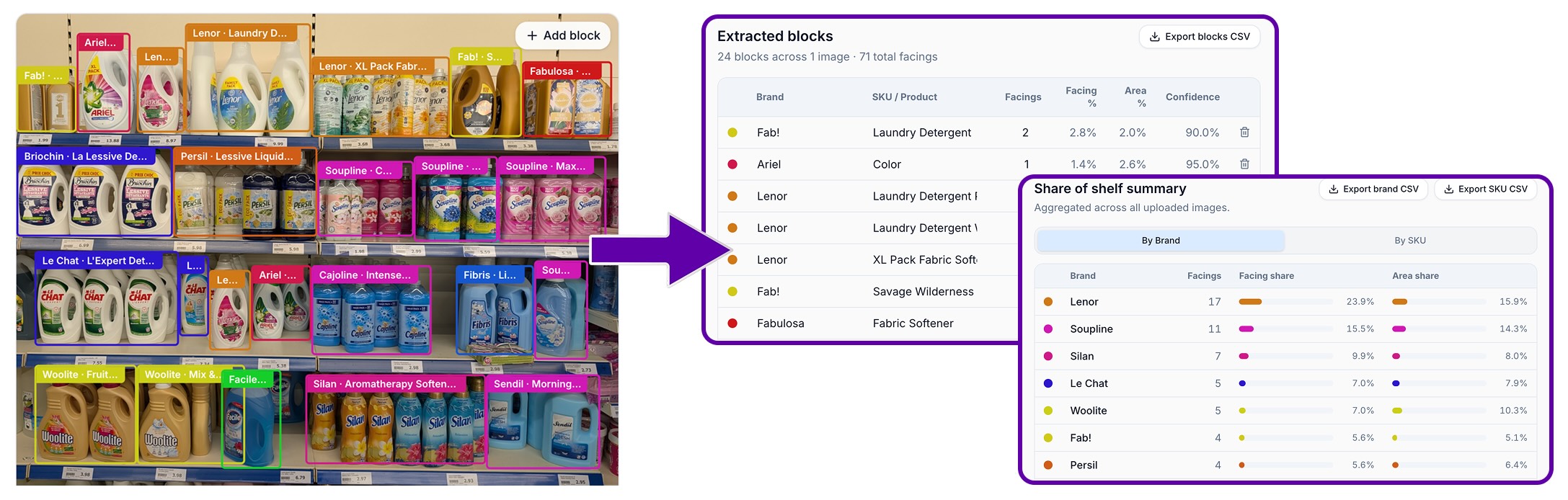
Extractify is a good choice if you want to upload shelf photos, detect brand blocks, calculate facing share and area share, manually correct the results, and export CSV data. It is especially useful if you do not need a large enterprise retail execution suite.
Choose Trax, Snap2Insight, ParallelDots, Ailet, or StayinFront if you need enterprise scale
These platforms are better suited for large CPG organizations with field teams, complex retail execution workflows, integrations, and large store coverage.
Choose Storesight if you want continuous measurement
Storesight is interesting if your priority is always-on shelf visibility instead of occasional store audits.
Choose manual spreadsheets only for low-volume audits
Manual counting can work for a few stores, but it becomes inefficient quickly.
Final recommendation
For most teams, the choice comes down to this:
- For a lightweight photo-based workflow: use Extractify
- For enterprise retail execution: use Trax Retail, Snap2Insight, ParallelDots ShelfWatch, Ailet, or StayinFront
- For continuous shelf visibility: use Storesight
- For occasional one-store checks: use a manual spreadsheet
Share of shelf used to be a slow, manual metric. Today, shelf photos and AI image recognition make it much easier to turn store visits into structured data. The right tool is the one that matches your workflow: quick CSV exports, field rep execution, enterprise analytics, or always-on shelf intelligence.
If you're specifically replacing Trax or benchmarking close substitutes, read our updated comparison of the top Trax alternatives in 2026.