How AI Merchandising Is Changing Retail and Why Shelf Data Matters More Than Ever
Retail teams do not have a shelf problem. They have a visibility problem.
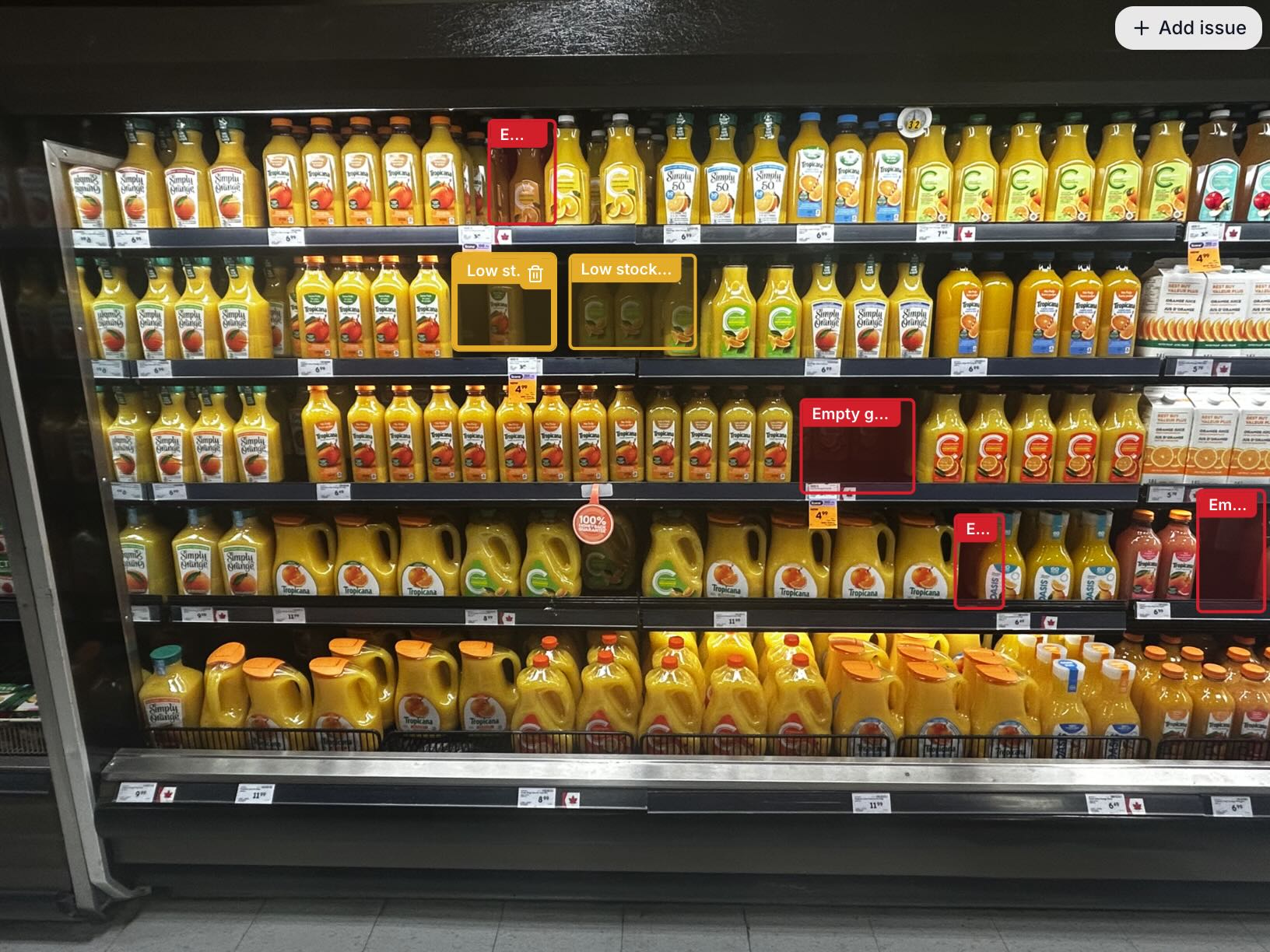
In most stores, the real issue is that brands lack fast, usable, shelf-level data. Products go out of stock. Items are misplaced. Promotions are executed unevenly.
Competitor facings change. And by the time someone manually notices, the store has already lost sales. NielsenIQ has pointed out how costly out-of-stocks can be, including an estimate that empty shelves cost U.S. retailers $82 billion in missed sales in 2021.
That is where AI merchandising starts to matter.
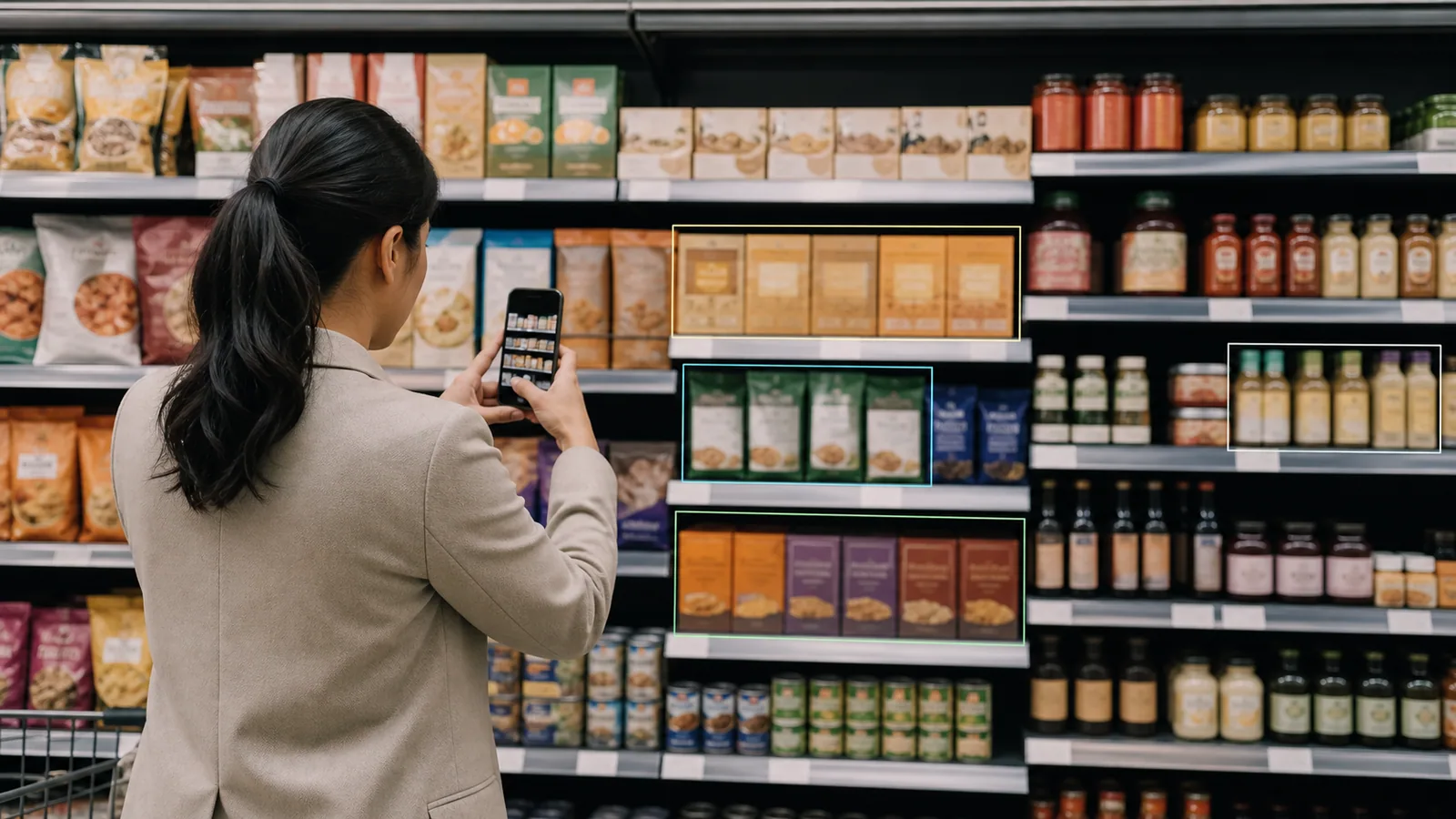
AI is changing retail because it helps turn messy store reality into structured, actionable information. Instead of relying only on manual audits, spreadsheets, and delayed reporting, retail and CPG teams can now use images, computer vision, and automation to understand what is happening on the shelf much faster.
Major platforms from Google Cloud, AWS, and Microsoft already frame shelf monitoring and computer vision as practical retail use cases, especially for improving stock visibility and store execution.
From merchandising decisions to merchandising signals
Traditional merchandising has always depended on store visits, photos, audits, and field reports. The problem is that most of that information is trapped in unstructured formats.
A sales rep takes a shelf photo. A category manager checks a planogram. A brand team reviews store conditions in a PowerPoint. Useful information exists, but it is buried inside images, PDFs, screenshots, and inconsistent reporting formats.
AI changes that by converting visual inputs into structured data that teams can actually use. Recent academic and industry work on shelf monitoring and planogram compliance shows exactly this direction: automated systems are being built to detect product presence, placement, and execution issues at scale because manual checks are slow, expensive, and error-prone.
This is the real promise of AI merchandising: not more dashboards for the sake of dashboards, but faster signals.

Why this matters now
Retail is becoming more demanding on two fronts at the same time.
First, customers expect better experiences. McKinsey has reported that 71% of consumers expect personalized interactions, and 76% get frustrated when they do not get them.
Second, store execution still breaks in very physical ways. Products are missing, labels are wrong, facings are reduced, or promotions are not where they should be. You cannot fix those problems with personalization alone. You need operational visibility.
That is why AI merchandising is increasingly splitting into two layers: customer-facing AI, such as personalization and recommendations, and execution-facing AI, such as shelf monitoring, image recognition, and automated store checks.
The second category gets less attention, but for many brands it is where the clearest operational ROI sits.
The problem with enterprise AI merchandising tools
A lot of discussion around AI in retail focuses on large enterprise systems. Those tools can be powerful, but they often assume that companies have dedicated IT resources, standardized photo pipelines, or heavyweight integrations.
That is not how many teams actually work.
In real life, field teams often have a folder of smartphone photos. Trade marketers have screenshots from retailer websites. E-commerce teams have product grids copied from different marketplaces.
Category managers receive mixed image formats from distributors, agencies, or local teams. The data is repetitive, but the format is not.
That gap matters. Because even when the visual information exists, it is still difficult to turn it into something structured without a custom workflow.
AI merchandising is only useful if teams trust the output
This is where many AI articles get too vague.
Retail teams do not need magical AI. They need output they can verify.
If an AI merchandising workflow creates a table from shelf photos, users need to understand what was extracted, what was uncertain, and what should still be checked by a human.
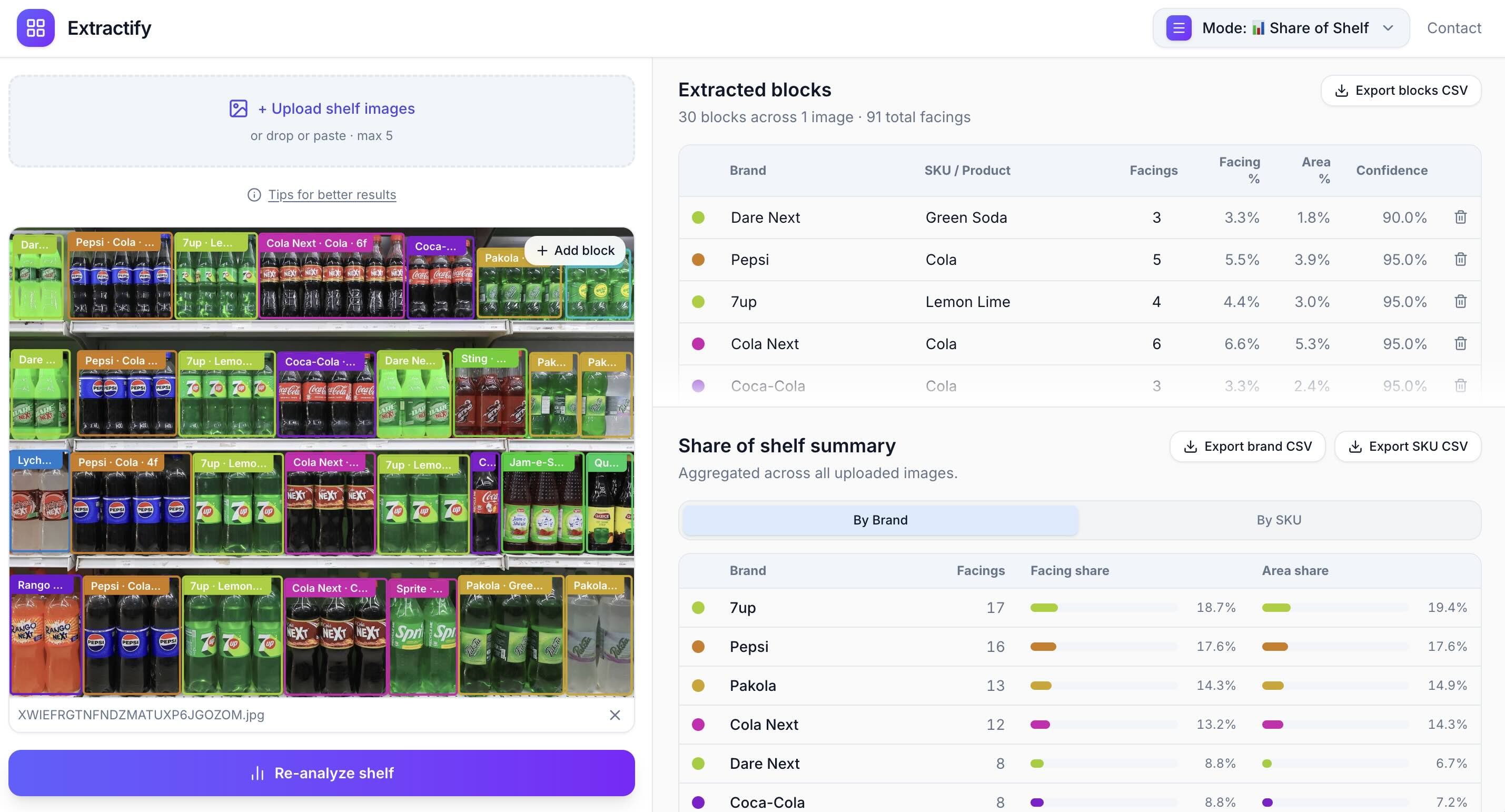
Trust matters even more in AI because confidence drops fast when systems feel opaque or error-prone. Broader research around AI adoption also keeps pointing back to governance and trust as core requirements, not optional extras.
That is why the best retail AI tools are not the ones that pretend to be perfect. They are the ones that make human review faster.
The next phase of merchandising is structured visual data
The retail industry is moving toward a model where images are no longer just documentation. They become data inputs.
A shelf photo is no longer only a photo. It becomes a record of assortment, compliance, availability, and pricing. A retailer webpage screenshot is no longer only a screenshot. It becomes structured competitive intelligence.
That shift is bigger than one tool or one trend. It reflects a broader move in retail toward AI systems that translate visual reality into operational signals.
The technology direction is already visible across cloud platforms and research on shelf monitoring: detect what is on shelf, structure the result, and use it to act faster.
A more practical AI merchandising workflow
This is where a lighter tool like Extractify fits.
Instead of promising a giant retail operating system, Extractify solves a simpler and more immediate problem: it helps teams turn images into tables.
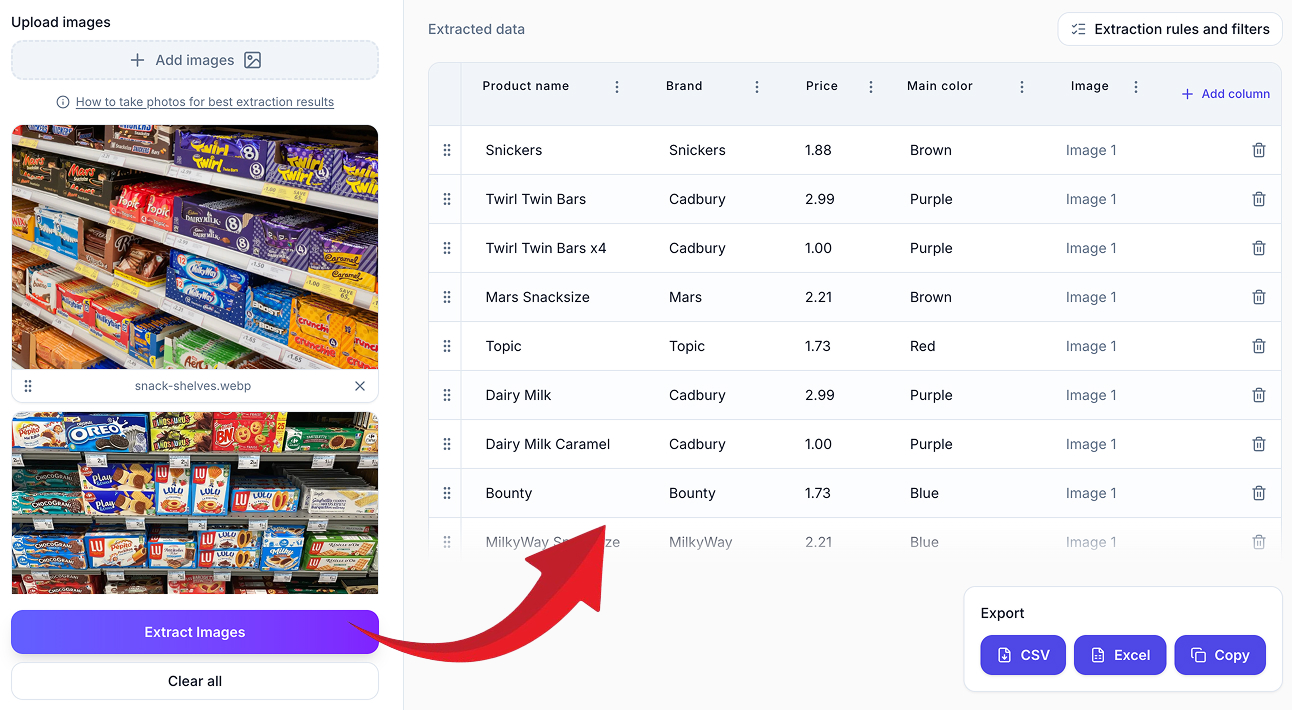
That matters for merchandising because a huge share of retail work still starts with visual evidence:
-
shelf photos from stores
-
screenshots from retailer websites
-
competitor product listings
-
assortment snapshots
-
planogram or shelf-check images
Those visuals can become structured data. A team can upload images, define the fields they want, and extract information into a usable table. That might mean product name, brand, price, promo tag, shelf position, pack size, stock status, or any other field visible in the image. If the question is less “what products are there?” and more “which brands own the shelf?”, the same store photos can also be used to measure share of shelf from photos.
The point is not just OCR. The point is turning repetitive visual merchandising work into structured operational data.
Final thought
AI merchandising is not just about making retail feel smarter. It is about making retail data more usable.
The brands that benefit most will not necessarily be the ones with the most futuristic AI messaging. They will be the ones that can turn shelf photos, screenshots, and store reality into structured decisions faster than everyone else.
That is the real advantage: not more AI noise, but less friction between seeing what happened and acting on it.